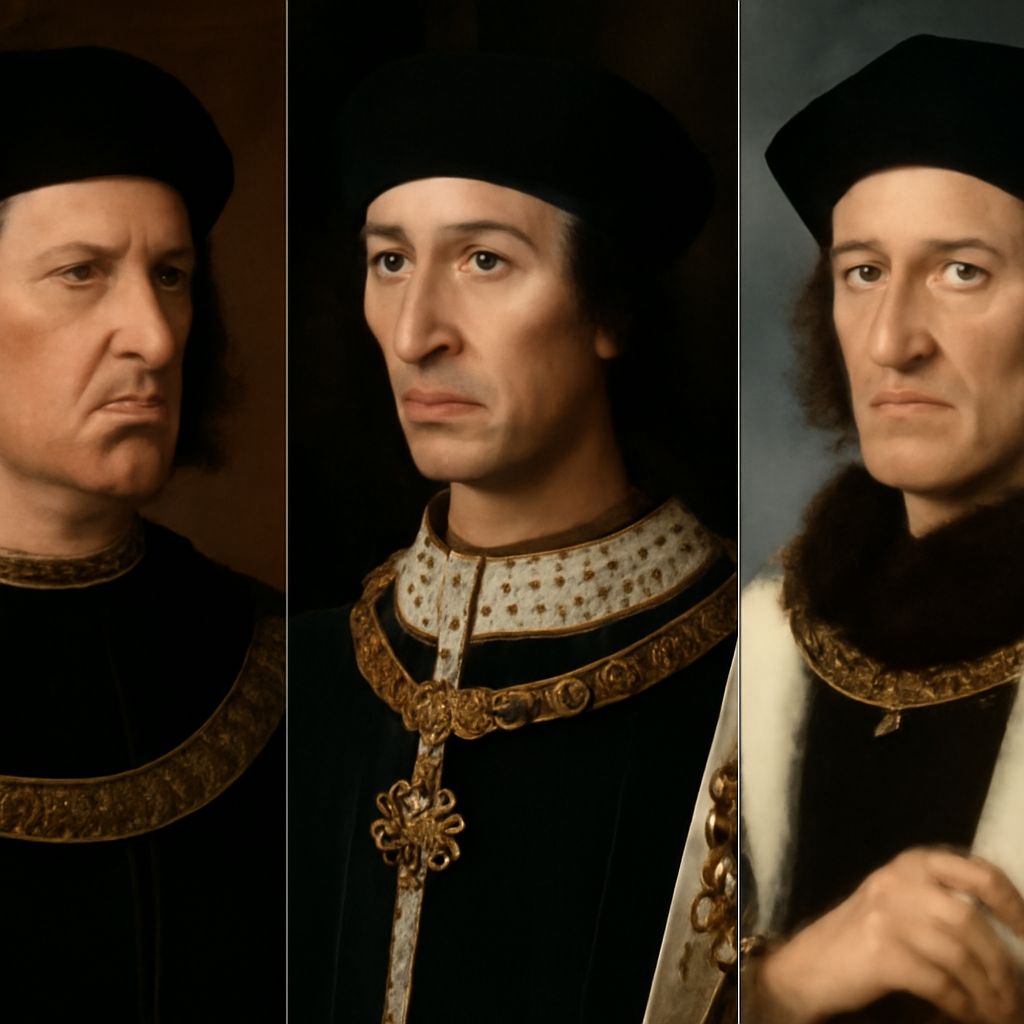
The War of the Roses was a series of dynastic conflicts that rocked England between 1455 and 1487. This long and bloody struggle was fought between two rival branches of the royal House of Plantagenet: the houses of Lancaster and York. The conflict was marked by periods of intense fighting and fragile truces, ultimately leading to a shift in power dynamics in the English monarchy.
Overview of the War of the Roses
The War of the Roses began due to political instability and power struggles following the weak reign of King Henry VI. The Lancastrians, associated with a red rose emblem, clashed with the Yorkists, symbolized by a white rose. These battles were not continuous but rather a series of engagements separated by uneasy peace.
Rooted in claims to the throne, the war was more than just a feud between two families—it was a conflict that drew in many nobles and their private armies, affecting the entire nation. Economic strains and dissatisfaction with leadership contributed to the unrest that fueled these battles.
Key Battles and Turning Points
Several decisive battles marked the course of the War of the Roses. The Battle of St. Albans in 1455 is often cited as the opening conflict, resulting in a Yorkist victory and the capture of King Henry VI. The Battle of Towton in 1461 was notably one of the largest and bloodiest battles, securing Edward IV’s position as King of England for the Yorkists.
Another critical engagement was the Battle of Tewkesbury in 1471, where Edward IV again defeated the Lancastrians, leading to the death of the Lancastrian heir, Prince Edward. This victory effectively ended the first phase of the conflict and solidified Yorkist control.
Who Won the War of the Roses?
The ultimate winner of the War of the Roses was the House of Tudor. Although the Yorkists initially gained the throne with Edward IV, the conflict continued until 1485. The final decisive battle was the Battle of Bosworth Field, where Henry Tudor, a Lancastrian claimant, defeated King Richard III, the last Yorkist king.
Henry Tudor’s victory at Bosworth Field marked the end of the war. He ascended to the throne as Henry VII and married Elizabeth of York, daughter of Edward IV, effectively uniting the two warring houses. This marriage symbolically ended the conflict, creating a new era of stability under the Tudor dynasty.
Aftermath and Legacy
The aftermath of the War of the Roses brought significant changes to England’s political landscape. Henry VII’s reign marked the beginning of the Tudor era, characterized by centralized royal power and the establishment of a stronger monarchy.
The war also had lasting impacts on English society. Many noble families were decimated, and the traditional feudal system was weakened. The conflict and its resolution set the stage for the Renaissance and the eventual rise of Britain as a formidable power in Europe.
The War of the Roses remains a pivotal period in English history, illustrating the complexities of dynastic struggles and their profound effects on a nation. The legacy of this conflict continues to be explored in literature and popular media, reaffirming its enduring significance.