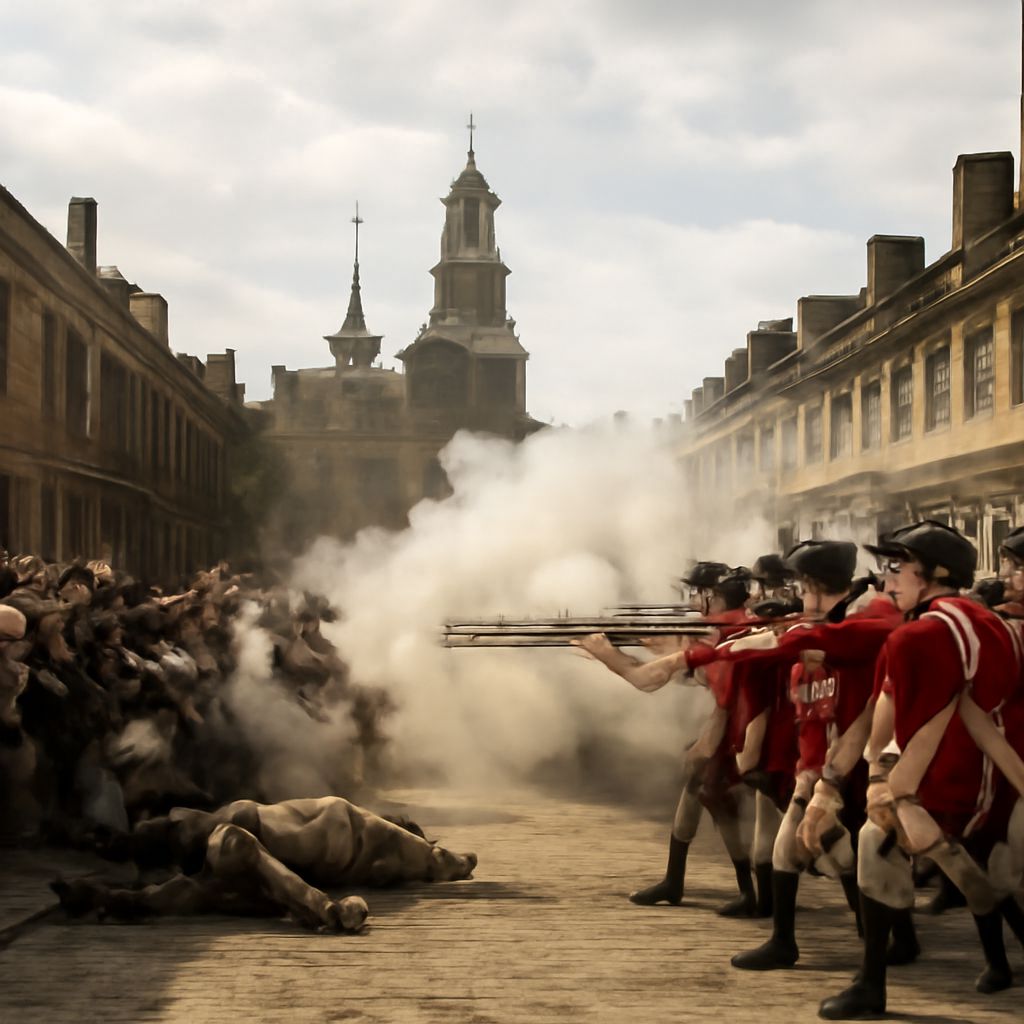
The Boston Massacre was a pivotal event in American history that escalated tensions between the American colonists and the British government. Occurring on the night of March 5, 1770, this confrontation resulted in the deaths of five colonists and played a significant role in sparking the American Revolution. Often referred to as “The Bloody Massacre,” it remains a vivid symbol of colonial resistance against British rule.
What Was the Boston Massacre
The Boston Massacre was a deadly encounter between British soldiers and American colonists on the snowy streets of Boston. It began as a small skirmish but quickly escalated into violence. The incident involved British troops firing into a crowd of colonists, leading to the deaths and injuries of several individuals. This clash highlighted the growing unrest and anger among the colonists towards British authority and taxation policies.
Events Leading to the Boston Massacre
Tensions between the colonists and British soldiers had been building for several years prior to the Boston Massacre. The British government had imposed a series of taxes, including the Townshend Acts, which placed a levy on essential goods like paper, paint, and tea. These taxes angered the colonists, who resented taxation without representation. As a result, protests and boycotts became increasingly common.
To enforce these unpopular laws and maintain order, Britain stationed additional troops in Boston, a move that only further inflamed tensions. The presence of these soldiers was seen as an occupying force, and hostility grew between them and the local population. Skirmishes and confrontations became frequent, setting the stage for a larger conflict.
What Happened at the Boston Massacre
On the evening of March 5, 1770, a confrontation erupted outside the Customs House on King Street, now known as State Street. A lone British soldier was confronted by an angry mob of colonists who hurled snowballs and insults. The situation quickly intensified as more soldiers arrived to support their comrade, forming a defensive line.
The crowd continued to grow, becoming more aggressive and unruly. In the chaos, the soldiers, feeling threatened and confused, fired into the crowd without explicit orders. Five colonists were killed, including Crispus Attucks, a man of African and Native American descent, who is often remembered as the first casualty of the American Revolution.
Aftermath and Impact
The Boston Massacre had a profound impact on the relationship between the colonies and Britain. News of the incident spread rapidly, fueled by sensationalist engravings and pamphlets, such as Paul Revere’s famous depiction titled “The Bloody Massacre.” This portrayal of the event as a brutal attack on peaceful colonists galvanized public opinion against the British.
In the aftermath, the British soldiers involved were put on trial. John Adams, who would later become the second President of the United States, served as their defense attorney. Despite the high tensions, Adams argued convincingly for their acquittal, citing self-defense. His involvement demonstrated the complexities of the colonial legal system and the desire for fairness, even amidst widespread anger.
The Boston Massacre helped to unite the colonies against British rule, becoming a rallying point in the buildup to the American Revolution. It underscored the colonists’ growing desire for independence and their willingness to stand against perceived injustices. As such, it remains a significant chapter in the story of America’s fight for freedom.