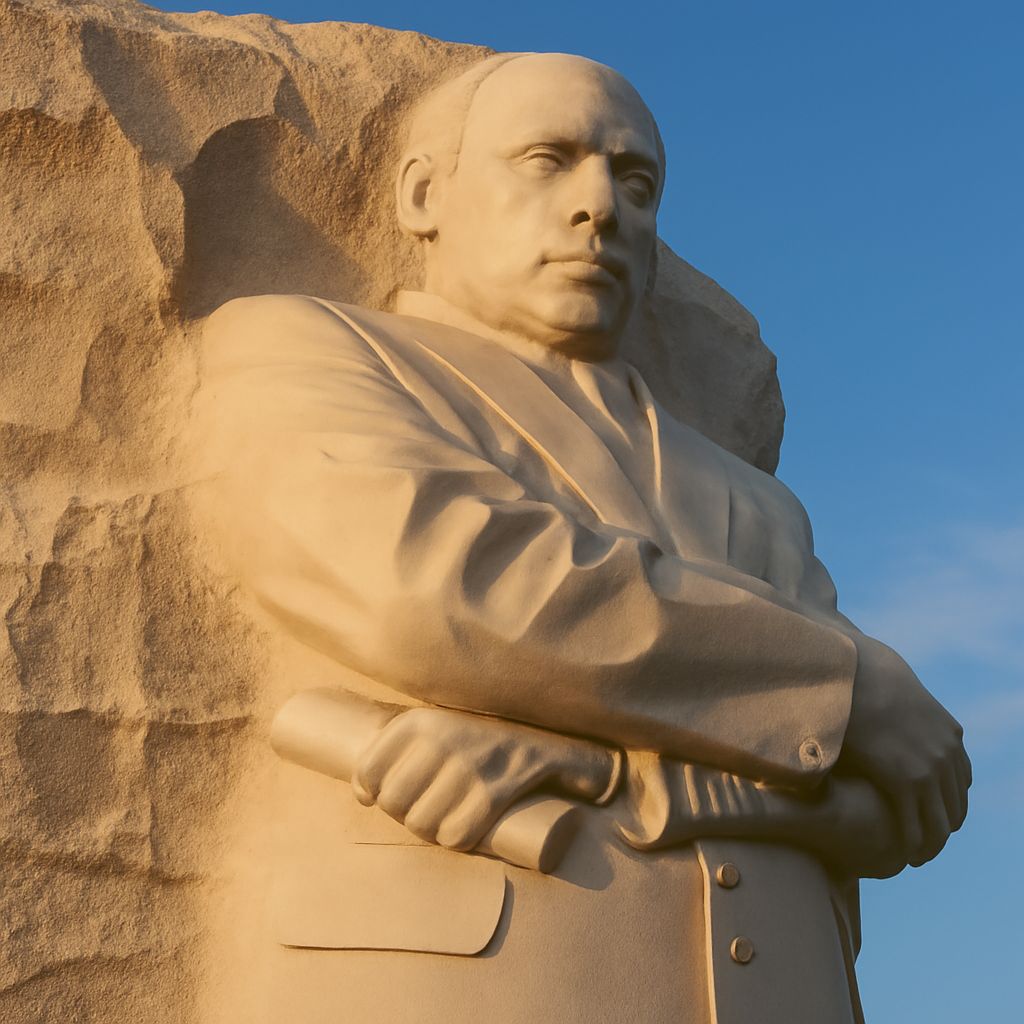
Speech rhetoric persuades by shaping how an audience understands a problem, feels about it, and responds to it. In Martin Luther King Jr.’s “I Have a Dream,” repeated phrases, vivid images, moral appeals, and carefully placed contrasts turn a civil rights argument into a shared call for action.
The rhetorical devices in I Have a Dream do more than decorate the language. Each device supports King’s purpose: to expose the gap between American ideals and Black Americans’ lived reality, then lead listeners toward hope, unity, and change.
How Speech Rhetoric Persuades an Audience
Rhetoric is the deliberate use of language to influence an audience. In a speech, meaning comes not only from the claims being made but also from rhythm, word choice, emotional appeal, and the order in which ideas appear.
A strong speech usually combines three kinds of appeal. Ethos builds trust in the speaker, logos presents a clear argument, and pathos creates an emotional connection. King combines all three by grounding his argument in American history, describing injustice plainly, and presenting equality as a hopeful moral vision.
His progression is especially important. The speech begins with the promise of freedom, identifies the failure to fulfill that promise, demands action in the present, and ends by imagining a nation transformed. This structure helps the audience move from recognition to responsibility and finally to hope.
Rhetorical Devices in I Have a Dream
Anaphora and Refrain
Anaphora repeats a word or phrase at the beginning of successive clauses or sentences. King’s repeated line, “I have a dream,” creates a strong rhythm and introduces a series of related visions. Each repetition gives the audience a familiar starting point while adding a new image of racial justice.
King also repeats phrases such as “Let freedom ring” and “We cannot be satisfied.” These refrains make key ideas memorable and give the speech a musical quality. Repetition also makes the argument feel collective: “we” becomes more prominent than the individual speaker.
Biblical and Freedom Imagery
King uses imagery to make abstract ideas visible. His references to a “sunlit path of racial justice,” a “valley of despair,” and a “stone of hope” turn political progress into a physical journey. The audience can picture movement from hardship toward a better future.
His biblical language gives the civil rights struggle moral and spiritual weight. The image of justice rolling “like waters” recalls the biblical prophet Amos, while “Let freedom ring” draws on patriotic language familiar to many Americans. These allusions connect the movement to religious belief and national identity.
Appeals, Contrast, and Allusion
King builds ethos by referring to the Declaration of Independence, the Emancipation Proclamation, and the Constitution. These documents represent values that many listeners already respect. His argument is therefore not that equality is foreign to America, but that America has failed to honor its own promises.
He uses contrast to sharpen that contradiction. Phrases such as “the riches of freedom” and “the poverty of freedom” place promise beside reality. The contrast makes injustice difficult to dismiss because the nation’s ideals are measured against the experiences of Black Americans.
King also balances urgency with discipline. He calls the present “the time” to act, but rejects hatred and violence as methods. This combination appeals to moral responsibility while reassuring a broad audience that the movement seeks justice rather than revenge.
How Repetition and Imagery Build the Argument
Repetition gives the speech its progression. Early repetitions emphasize broken promises and present danger. Later repetitions turn toward possibility, allowing the speech to move from accusation to vision without abandoning its demand for immediate change.
Imagery makes that progression easier to follow. King describes injustice through images of chains, segregation, poverty, and injustice, then replaces those images with mountains, streams, bells, and freedom. The change in imagery mirrors the change he wants in society.
The sound of the language also matters. Short, balanced phrases are easy to remember and powerful when spoken aloud. As King repeats “Let freedom ring” across different American locations, the movement expands from a single community to the entire nation. His audience is invited to imagine freedom as shared rather than limited.
Rhetorical Questions and Question Marks
Rhetorical Function
A rhetorical question is asked for emphasis, reflection, or persuasion rather than to obtain a literal answer. In King’s speech, the line “When will you be satisfied?” represents the question critics or opponents might ask of civil rights activists. King answers it by listing continuing injustices, showing why the movement cannot stop.
The question creates a brief challenge between the audience and the speaker. It anticipates an objection, then gives King a chance to answer that objection with evidence. This makes the speech feel like a direct conversation while strengthening its central claim that freedom cannot be postponed.
Not every emphatic statement is a rhetorical question. “We cannot walk alone” is a declarative sentence expressing solidarity, not a question. A sentence can be persuasive or forceful without using interrogative grammar.
When the Question Mark Belongs
A rhetorical question normally takes a question mark when it is grammatically framed as a direct question. For example, “When will you be satisfied?” and “Can a nation be free while part of its people remain oppressed?” both use question marks because they ask directly, even though the speaker expects reflection rather than an answer.
A rhetorical question mark is not determined by the speaker’s intention alone. It depends on the sentence’s grammatical form. An indirect question uses a period: “The audience wondered when justice would come.” Likewise, a statement such as “We will not rest until justice is served” is not a rhetorical question and should not receive a question mark.