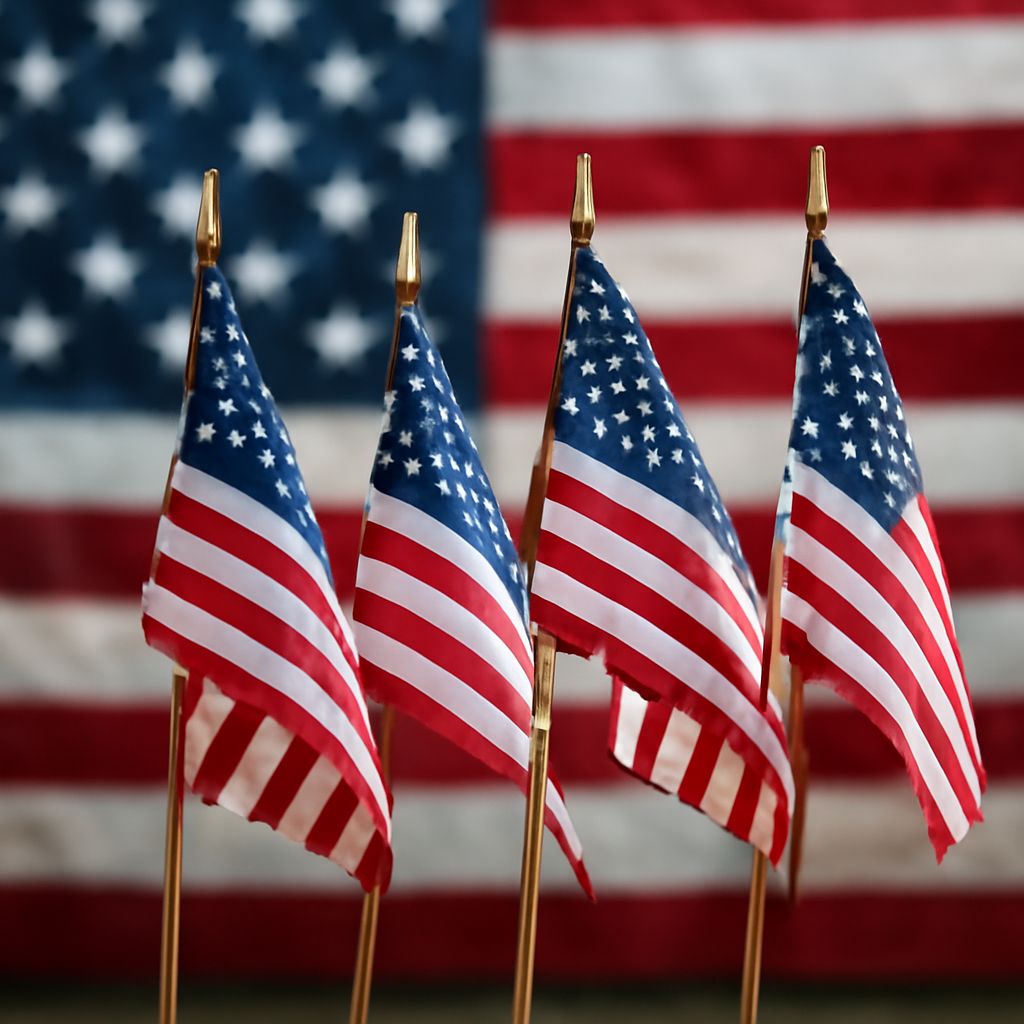
In 1984, Gregory Lee Johnson burned an American flag during a political protest in Dallas. Texas convicted him under a law against desecrating a respected object. Five years later, the US Supreme Court held that his conviction violated the First Amendment, because his conduct in that setting was protected expression.
The Texas versus Johnson case asked whether a state could punish a political message conveyed through an act that many people regarded as deeply offensive. Its answer turned on the expressive character of Johnson’s protest and the reasons Texas gave for restricting it. The 1989 Johnson decision did not make every act involving a flag immune from ordinary laws.
Texas vs Johnson Case: The Protest and Conviction
Johnson joined a demonstration during the 1984 Republican National Convention, where President Ronald Reagan was being nominated for reelection. Protesters marched through Dallas criticizing the administration and corporate interests. Outside Dallas City Hall, Johnson set fire to a flag while demonstrators chanted political slogans.
Texas prosecuted him under a statute that prohibited intentionally or knowingly desecrating a flag in a way the actor knew would seriously offend others. A jury convicted Johnson, and he was sentenced to a year in jail and a fine. The Texas Court of Criminal Appeals reversed the conviction on free-speech grounds. The Texas vs Johnson case then reached the US Supreme Court on the state’s appeal.
A Texas v. Johnson summary starts with this distinction: the case concerned punishment for a particular expressive act, rather than a general rule that every action is speech. The protest’s setting and the message it conveyed mattered to the constitutional analysis.
The Legal Question and the 1989 Decision
The First Amendment restricts government interference with freedom of speech. Courts have long recognized that some conduct can communicate a message as clearly as words. This is often called symbolic speech or expressive conduct. To assess whether conduct is expressive, context matters: what the person intended to communicate and whether observers were likely to understand the message are relevant.
In its decision, the Supreme Court decided by a 5–4 vote in 1989 that Johnson’s conviction could not stand. Justice William Brennan wrote the majority opinion. The Texas v Johnson 1989 ruling treated the burning as expressive conduct in the circumstances of a public political demonstration.
Texas asserted interests in preventing breaches of the peace and preserving the flag as a symbol of national unity. The majority found no disturbance of the peace or threat of one on the facts before it. It also concluded that the state’s concern about preserving the flag was tied to suppressing the message communicated by the burning. That made the restriction subject to demanding First Amendment review.
The majority’s central point was that government cannot prohibit expression simply because people find its message offensive. Protecting an unpopular act did not require the justices to approve of it; it required them to apply the same constitutional principle to a message they could reject.
Why the Justices Disagreed
The dissenters gave the flag’s public meaning greater legal weight. Chief Justice William Rehnquist, joined by Justices Byron White and Sandra Day O’Connor, argued that the flag occupied a special place as a symbol of national unity and that the state could protect it from public desecration. He regarded flag burning as conveying little distinct information compared with other ways to protest.
Justice John Paul Stevens wrote separately. He stressed the flag’s value as a symbol and argued that prohibiting its desecration left protesters free to express their disagreement by other means. In the Texas vs. Johnson opinions, the disagreement therefore concerned both the weight of the state’s interest and the constitutional treatment of the chosen form of protest.
The majority answered that the government could not preserve a symbol’s meaning by forbidding people to use it to express a contrary view. For Brennan, the possibility that a speaker could choose another method did not justify suppressing this one because of its message. The division was over the state’s power to enforce a particular form of respect for the flag.
Significance and Limits
The ruling protected political expression against a state law applied because of the meaning communicated. It also illustrated that speech can take a physical form. At the same time, expressive conduct can be regulated in some circumstances: an otherwise valid rule addressing fire safety or the protection of another person’s property raises different questions from a rule aimed at suppressing a political viewpoint.
In response to the decision, Congress passed the Flag Protection Act of 1989. In United States v. Eichman, the Supreme Court struck down applications of that federal law in 1990, concluding that its asserted interest was related to suppressing expression. Together, the cases are important precedents on government restrictions aimed at the message conveyed by flag desecration.
What does the decision mean for other flag disputes? It protects Johnson’s protest against the Texas law as applied to him; it does not decide every case involving a flag. Ownership, safety, location, the government’s reasons for regulation, and the precise conduct can affect a later dispute. The Johnson ruling of 1989 supplies the constitutional principle, while those facts determine how a court applies it.