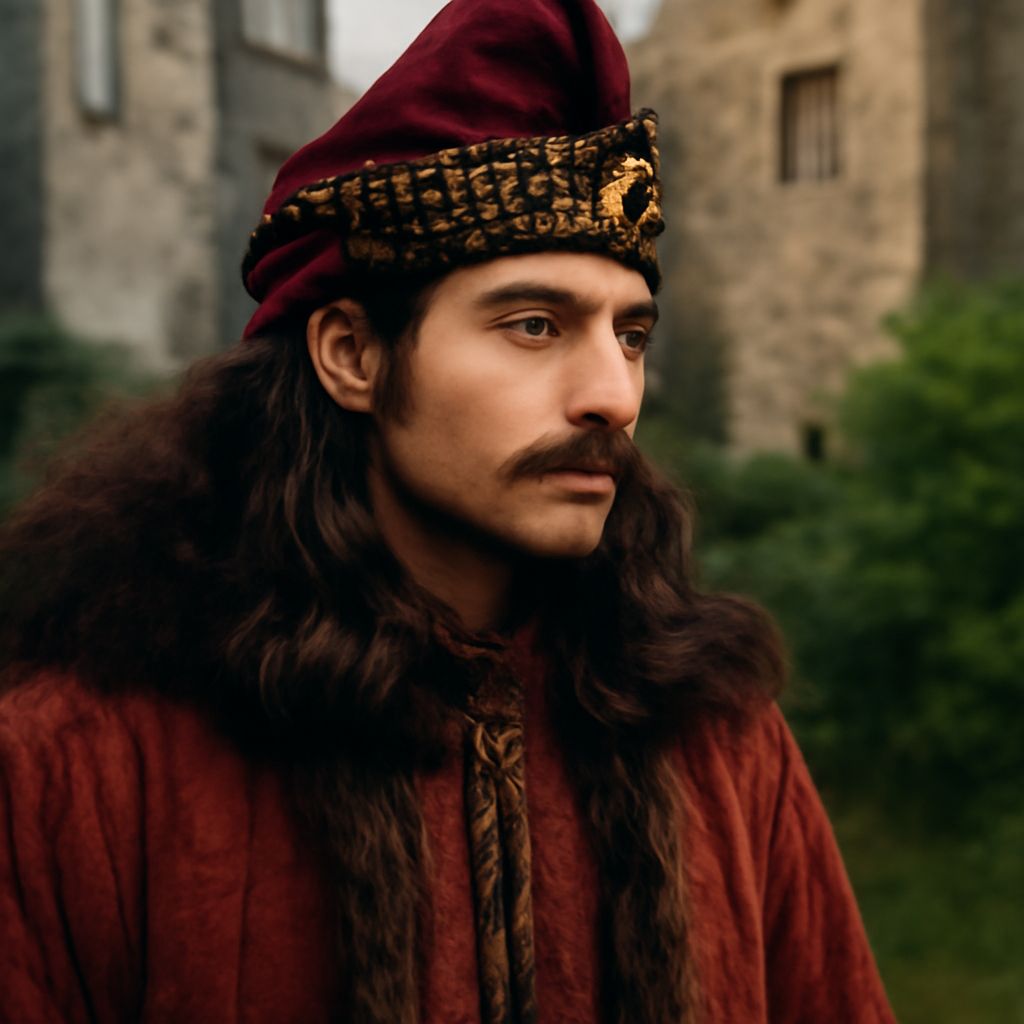
Vlad Dracula, often called Vlad the Impaler, is one of history’s most infamous rulers. Known both for his brutal methods and as the inspiration for Bram Stoker’s Dracula, his true story is both fascinating and misunderstood. Today, we explore who Vlad III truly was, the legends that surround the real Dracula, his reign, and most importantly, where Vlad the Impaler lived during his lifetime.
Who Was Vlad Dracula?
Vlad Dracula, whose real name was Vlad III, was born in 1431 in the town of Sighișoara, in what is now Romania. His father, Vlad II Dracul, was a member of the Order of the Dragon, a chivalric order dedicated to defending Christianity in Eastern Europe. The name “Dracula” comes from his father’s title; “Dracul” means “dragon” in medieval Romanian, while “Dracula” translates to “son of the dragon.”
Vlad III became known as Vlad the Impaler because of his favored method of execution—impaling enemies on long wooden stakes. This gruesome technique earned him a reputation for cruelty, but also for strength and justice in the eyes of many Romanians at the time. Vlad’s rule was marked by a relentless fight against the expansion of the Ottoman Empire and efforts to strengthen his own principality of Wallachia.
Despite his fearsome legacy, Vlad Dracula is seen by many in Romania as a national hero. He was known for defending his land against foreign invaders and for implementing strict, if brutal, laws to maintain order. His life and legacy remain controversial, with some viewing him as a monster and others as a savior.
His story has captured imaginations for centuries, blending historical fact with myth and fiction. This mix has led to the worldwide legend of Dracula, a name now linked inseparably with both history and horror fiction.
The Real Dracula: Separating Fact from Legend
The real Dracula was not a vampire, but a 15th-century Romanian ruler. Much of what people believe about Vlad Dracula is entwined with myth, especially after Bram Stoker published his novel “Dracula” in 1897. Stoker borrowed Vlad’s nickname and reputation for cruelty but created a fictional vampire character based only loosely on historical facts.
Historical records show that Vlad III ruled Wallachia three times between 1448 and 1476. His reign was defined by constant battles with the Ottomans, local rivals, and even Hungarian kings. He became infamous for his extreme punishments, particularly impalement, but these were meant to instill fear and enforce order in a lawless time when invasions and betrayals were common.
Many of the more gruesome tales about Vlad were spread by his enemies, especially German and Hungarian pamphlets from the 15th and 16th centuries. These stories described elaborate torture and mass executions, painting Vlad as a sadistic villain. However, Romanian chronicles often present him in a more positive light, emphasizing his defense of the country and his tough stance against corruption and crime.
Separating fact from legend is challenging, but most historians agree that Vlad Dracula was a complex figure shaped by a violent era. While his actions were often brutal, they were not uncommon for rulers of his time who faced constant threats from both outside and within their own borders.
Vlad III and His Reign
Vlad III’s main goal as ruler was to secure his throne and protect Wallachia from invaders, particularly the Ottomans. He used fear as a weapon, making examples of traitors, criminals, and enemy soldiers. It is estimated that tens of thousands died during his rule, many of them by impalement, which gave him his chilling nickname.
During his years in power, Vlad III fought multiple wars and faced betrayals from both his boyars (noblemen) and family members. At times, he was forced into exile and even imprisonment. Despite these setbacks, he returned to power several times, demonstrating both his determination and skill as a leader.
Vlad implemented strict laws to curb theft, dishonesty, and corruption in Wallachia. According to legend, he was so successful that a golden cup was said to be left unguarded in the town square without fear of theft. While stories like this may be exaggerated, they highlight the reputation Vlad built for fairness—at least in the sense of applying the law equally, however harshly.
His leadership also extended to military innovation. Vlad used guerrilla tactics, psychological warfare, and a network of spies to keep his enemies at bay. Despite his reputation in the West, he played a crucial role in holding back the Ottoman advance into Europe during the 15th century.
Where Did Vlad the Impaler Live?
The question of where did Vlad the Impaler live has fascinated historians and tourists alike. Vlad III’s main residence was the fortress of Poenari, perched high in the Carpathian Mountains overlooking the Argeș River. Poenari Castle is often considered the true “Dracula’s Castle” due to its direct connection with Vlad’s life and military campaigns.
Poenari Castle was originally built in the 13th century but was restored and reinforced by Vlad Dracula to serve as a stronghold against invaders. The castle’s remote and almost inaccessible location made it ideal for defense. Today, it stands in ruins but can be visited by climbing almost 1,500 steps up the mountain, offering dramatic views and a direct link to Vlad’s history.
Vlad also spent time in other locations, including Târgoviște, the capital of Wallachia during his reign. The Princely Court in Târgoviște featured a palace and a fortified tower, serving as the administrative center of his rule. Some sources also mention Bran Castle, but there is little historical evidence that Vlad III used it as a residence; this connection is largely a modern tourist association fueled by fiction.
Apart from these, Vlad’s early years were spent in Sighișoara, where his birthplace still stands and is marked as a tourist site today. Throughout his reign, he moved between these strongholds depending on military campaigns and threats to his safety. The places Vlad Dracula lived are scattered across Romania, but Poenari and Târgoviște remain the most closely linked to the real Dracula’s life and legend.