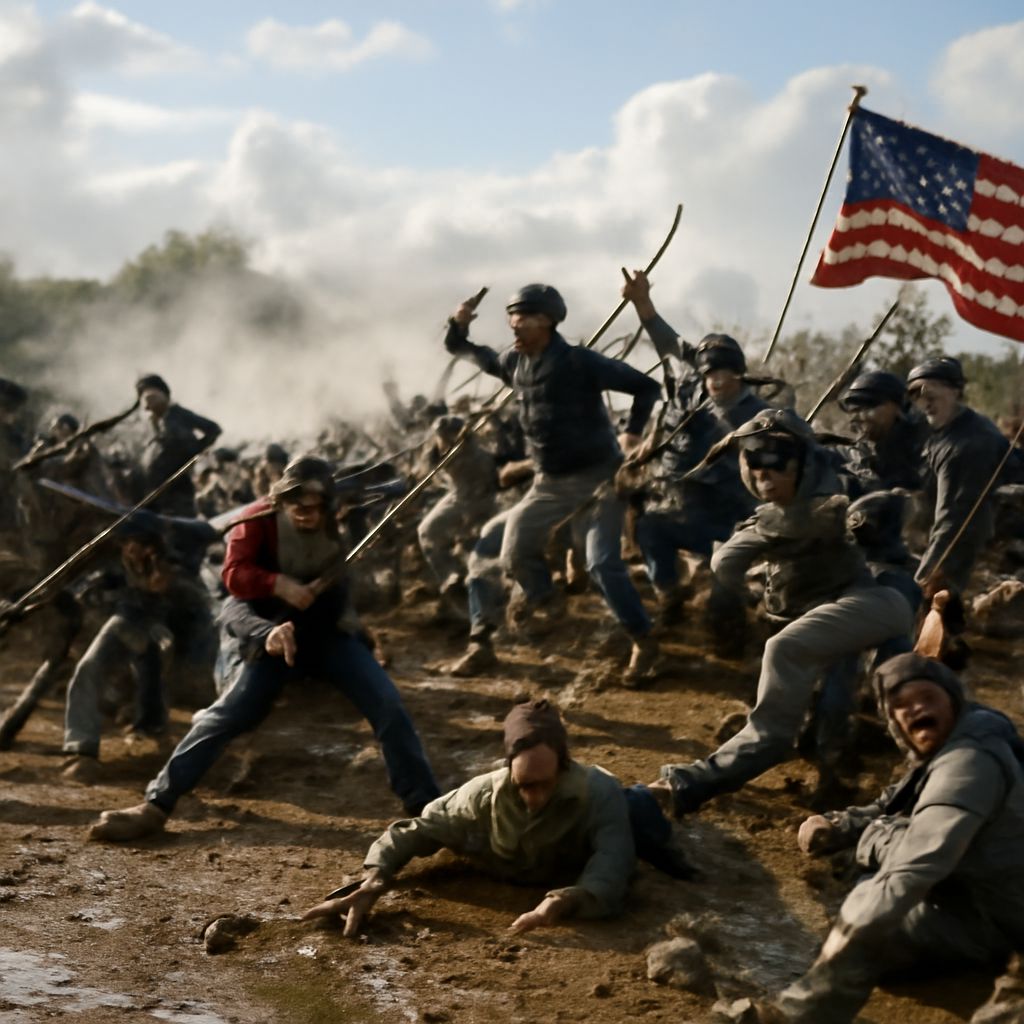
On December 20, 1860, South Carolina voted to leave the United States. Its leaders explained their decision in a declaration that repeatedly addressed slavery, including their complaints about Northern resistance to the return of people who had escaped enslavement. To understand why the American Civil War started and how the conflict happened, that document matters more than later claims that the dispute had little to do with slavery.
Why did the Civil War happen when it did? Fighting began months later, at Fort Sumter. Between the vote for secession and the bombardment stood a political crisis over the future of slavery, the power of the federal government, and whether a state could leave the Union. These were connected questions, not separate explanations of equal weight.
Why did the Civil War happen after decades of dispute?
Slavery was a system of forced labor and hereditary bondage. Enslaved people could be bought and sold, separated from family, and denied basic freedom. By 1860, nearly four million people were enslaved in the United States, most in the South. Their labor supported the cotton economy and enriched enslavers.
Slavery was also a question of political power. As the United States acquired western territory, Americans argued over whether enslavers could bring enslaved people into those territories and whether new states would enter the Union permitting or prohibiting slavery. The balance mattered in Congress, especially in the Senate. The question of why civil war started in America cannot be separated from those disputes over expansion.
Compromises postponed confrontation without resolving the underlying conflict. The Compromise of 1850 included a stronger Fugitive Slave Act, which required federal assistance in the capture of people alleged to have escaped slavery. In 1854, the Kansas-Nebraska Act opened the possibility of slavery in areas where an earlier congressional restriction had barred it, producing violent conflict in Kansas. The Supreme Court’s 1857 Dred Scott decision further inflamed the dispute by denying Black citizenship under its interpretation and rejecting Congress’s power to prohibit slavery in the territories.
Abolitionists, including Black writers and activists who had experienced slavery, challenged the institution directly. Many white Northerners opposed its expansion without supporting racial equality or immediate abolition everywhere. Southern opinion was not uniform either. Nevertheless, the political leaders who organized secession made protection of slavery a central concern.
Lincoln’s election and secession
The Republican Party opposed the expansion of slavery into the territories. Abraham Lincoln won the presidential election of 1860 without carrying the states of the Deep South. He did not run on a promise to abolish slavery immediately in states where it already existed, but many enslavers saw the loss of national political power as a threat to slavery’s long-term security.
South Carolina seceded first. By February 1861, Mississippi, Florida, Alabama, Georgia, Louisiana, and Texas had also seceded; representatives of the first six formed the Confederate States of America, and Texas soon joined. The new Confederate government asserted its own authority over the territory claimed by its member states. Lincoln and other Union leaders rejected the legality of secession.
Why did civil war start rather than a peaceful separation follow? Secession created a direct clash over sovereignty, federal property, and the continued existence of the Union. Southern leaders chose to leave rather than accept an elected administration whose position threatened slavery’s expansion; Union leaders insisted that states could not unilaterally dissolve the nation.
What secession documents say
Mississippi’s declaration linked its position directly to slavery, while South Carolina’s condemned Northern states’ resistance to the enforcement of federal fugitive slave law. Georgia and Texas also identified threats to slavery in their explanations of secession. These documents reveal what secessionist leaders publicly identified as vital.
The phrase “states’ rights” requires the same attention to specifics. Secessionists claimed a right to leave the Union and defended state authority in some matters, yet they also demanded federal enforcement of slaveholders’ claims across state lines. The relevant question is which rights were being asserted and for what purpose. The National Park Service’s account of slavery and secession places these contemporary declarations alongside the events that followed.
Economic interests mattered because enslaved labor was central to the wealth and power of slaveholding society. Tariffs and other policy disputes existed, but the secession declarations give far stronger direct evidence for slavery’s central role in the crisis of 1860–1861 than for a general dispute over taxation alone. Later “Lost Cause” accounts often minimized slavery and emphasized an abstract defense of local rights; comparing them with contemporary documents exposes that omission.
Fort Sumter and the first shots
Federal troops still held Fort Sumter in Charleston Harbor after South Carolina seceded. The Confederate authorities demanded its surrender. Lincoln chose to send supplies to the garrison, and Confederate forces opened fire on April 12, 1861. The fort surrendered after the bombardment. This was the immediate beginning of large-scale war, not the underlying cause of secession.
Why did the Civil War begin with a dispute over one fort? Both governments claimed authority there: Confederate leaders regarded the federal presence as incompatible with their asserted independence, while Lincoln treated the fort as federal property and secession as unlawful. The decision to fire turned an escalating constitutional and political confrontation into open combat.
After Sumter, Lincoln called for volunteers to suppress the rebellion. Virginia, Arkansas, North Carolina, and Tennessee then seceded and joined the Confederacy. Several slaveholding border states remained in the Union, complicating the contrast between geography and political allegiance. As the Library of Congress overview explains, Union leaders initially framed their overriding war aim as preserving the United States; emancipation became an explicit Union war aim as the conflict developed.
What really started the Civil War was a sequence: conflict over slavery, secession, and a clash over federal authority. Why did the Civil War start in 1861? Lincoln’s election and decisions over secession and Sumter brought the crisis to war.