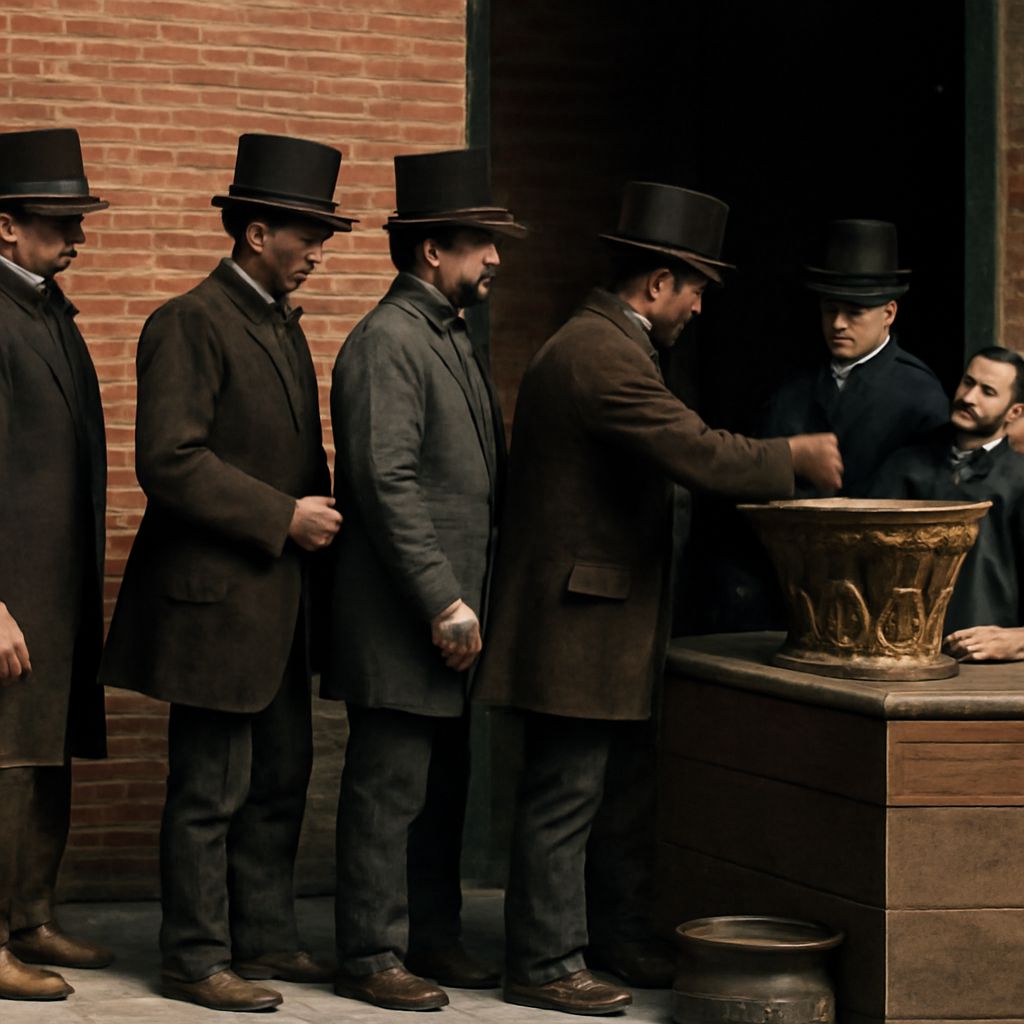
Machine politics was a system in which a political organization won and kept power by exchanging services, jobs, and favors for votes. In 19th-century American cities, political machines often worked through neighborhood leaders who understood local needs and delivered help more directly than formal government agencies did.
New York City’s Tammany Hall shows both sides of this system. It helped immigrants find work, food, housing assistance, and access to government, but its leaders also used patronage, inflated contracts, and political pressure to enrich themselves. William “Boss” Tweed became the best-known example of how machine power could provide services while undermining public trust.
What Machine Politics Means
A political machine is a durable party organization that controls elections through a network of local workers. Its goal is not only to win one campaign. It is to maintain influence over voters, public offices, government decisions, and the flow of money.
The basic unit was often the ward, a local district within a city. A ward leader or precinct captain knew residents personally, tracked political support, and reported which voters needed help. This gave the machine detailed knowledge of the neighborhood and made election turnout easier to organize.
Machines depended on an exchange. Voters might receive assistance with rent, food, coal, legal problems, immigration paperwork, or government services. In return, machine workers expected votes, campaign work, loyalty, or attendance at political events. The arrangement could be voluntary, practical, or coercive, depending on the organization and the person involved.
The system also relied on patronage, the practice of giving public jobs or contracts to political supporters. A machine that controlled city offices could reward loyal workers with positions and direct construction work to friendly businesses. This created a chain of dependence from party leaders to ward captains, workers, contractors, and voters.
How Political Machines Built Support
Political machines built support by combining organization with services. Their workers were visible in neighborhoods, especially where government programs were weak or difficult to access. A resident might not trust an abstract city department, but might know the local captain who could help solve a problem.
- Ward organization: Local captains registered voters, arranged transportation to the polls, distributed campaign materials, and monitored turnout.
- Personal assistance: Machine workers helped residents obtain food, fuel, jobs, medical aid, or help with courts and city offices.
- Patronage: Party leaders used public employment to reward supporters and create a reliable campaign workforce.
- Contracts and influence: Machine officials could steer public construction and supply contracts toward political allies.
This structure was especially powerful among immigrant communities. New arrivals often faced language barriers, discrimination, and unfamiliar legal systems. A machine could offer a path into city life by helping with naturalization, employment, and local representation. That practical support explains why some residents supported machines even when they knew the organizations were corrupt.
Yet the exchange was rarely equal. Machine leaders could demand political loyalty, manipulate elections, or deny help to opponents. Some organizations used fraudulent voting, intimidation, or control of election officials. The same network that connected neglected communities to government could also limit competition and weaken democratic accountability.
Who Was Boss Tweed?
William “Boss” Tweed was a New York politician and the most famous leader associated with Tammany Hall. Born in 1823, he entered local Democratic politics and held positions as an alderman, state senator, and congressman. He built influence through personal alliances and a disciplined network of Tammany officials.
Tweed did not rule New York alone. His power came from a group often called the Tweed Ring, which included political allies, city officials, and business figures. Together, they influenced city government, controlled appointments, and used public spending to strengthen their organization.
His central advantage was control over decisions that affected money and jobs. Tammany could place supporters in government posts, approve major construction projects, and reward contractors who cooperated with the organization. Tweed also used his political influence to shape legislation and protect the interests of his network.
Tweed’s reputation became tied to the construction of the New York County Courthouse, where costs rose far beyond reasonable estimates. Contractors and officials allegedly submitted inflated bills, with portions of the money returning to members of the political network. The courthouse became a lasting symbol of machine corruption because public funds supported private enrichment.
The Significance of Political Machines: Tammany Hall, Corruption, and Reform
The significance of political machines lies in their mixed record. They could make government more responsive to people who had little wealth or formal influence. Tammany Hall, for example, helped many immigrants gain a voice in New York politics and connected them to services that city institutions often failed to provide.
At the same time, machine government blurred the line between public duty and private profit. Jobs were treated as political rewards, contracts could be manipulated, and public decisions were made through personal alliances rather than open procedures. A machine’s service network therefore depended on power that was difficult for outsiders to challenge.
Tweed’s fall showed how that power could be broken. Newspapers, including The New York Times, published investigations into the city’s finances, while political cartoonist Thomas Nast made the alleged corruption understandable to a broad audience. Reformers used the evidence to turn public anger against Tweed and his allies.
Tweed was arrested and convicted in the 1870s, although the political system he represented did not disappear immediately. His downfall strengthened demands for budget oversight, competitive public contracts, civil service reform, and less dependence on party patronage.
Tammany Hall later continued as a major Democratic organization, and not every urban party organization operated like the Tweed Ring. The broader lesson is that machine politics could expand political participation and provide real help while also encouraging corruption. Boss Tweed became historically significant because his rise and fall exposed both the appeal and the danger of that bargain.