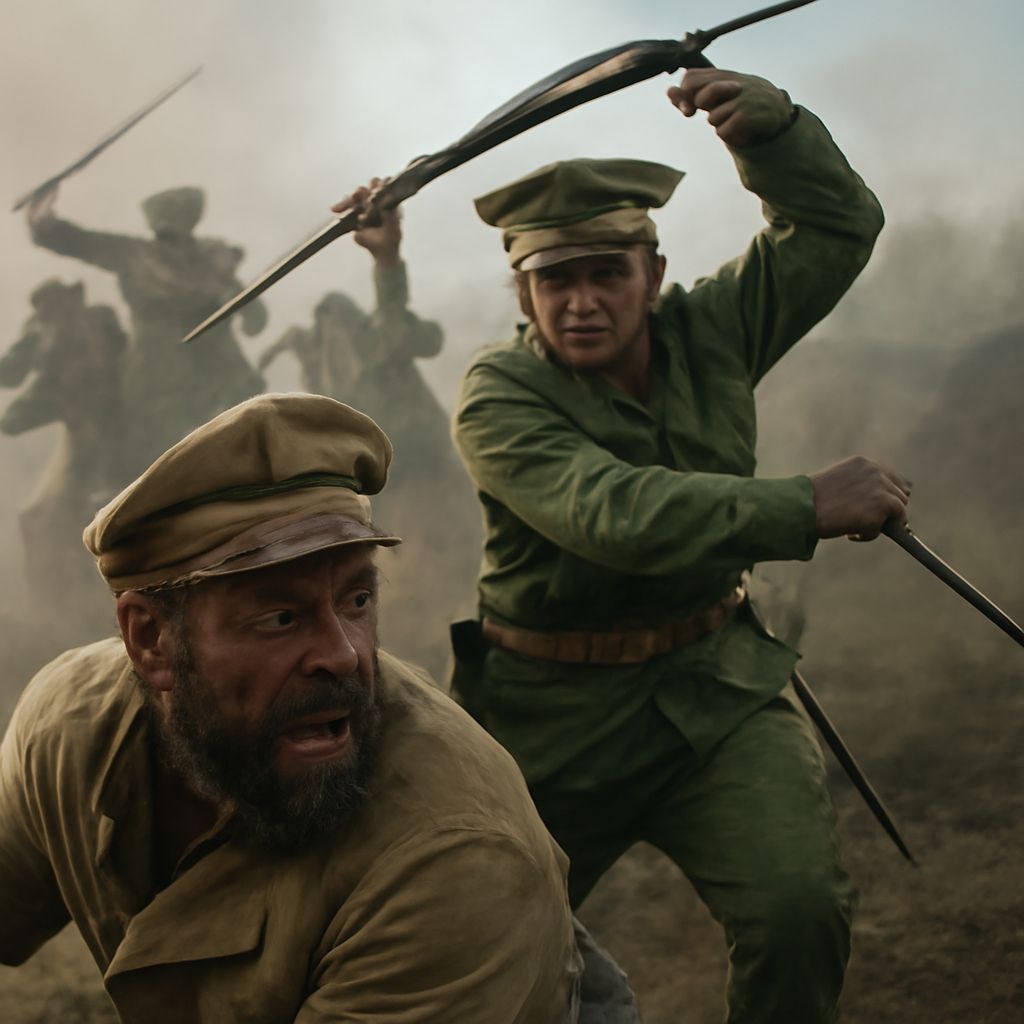
WWI posters turned public walls into tools for recruitment, fundraising, and behavior change. Governments, armies, charities, and bond committees used simple images and urgent words to frame military service as duty and national loyalty as action.
Placed beside the King Andrew cartoon and Soviet posters, these campaigns show a shift from personal caricature to mass persuasion. The sponsor, audience, symbols, typography, and emotional appeal changed, but each image tried to define who held power and what viewers should do next.
The political cartoon of King Andrew the First: Jackson, monarchy, and executive power
The King Andrew the First political cartoon appeared during the controversy over Andrew Jackson’s presidency, especially his 1832 veto of the Bank of the United States and his expanding use of executive authority. Usually credited to lithographer Henry R. Robinson and published around 1833, it presents Jackson as a crowned monarch rather than a republican president.
Jackson wears royal clothing and holds symbols associated with command, including a paper marked “Veto.” The Constitution and other signs of republican government appear beneath or around him, suggesting that the president has trampled the limits meant to restrain him. The image’s argument is not simply that Jackson is powerful; it is that he has become dangerously king-like.
Its sponsor was the anti-Jacksonian print culture of the period, and its audience was a politically engaged voting public. Caricature did the main work: exaggeration turned an argument about banking and executive power into an instantly readable accusation of tyranny. The intended action was political resistance, not enlistment or consumption.
WWI posters: Recruitment, bonds, and home-front campaigns
WWI posters addressed several audiences, so they cannot be reduced to recruitment images. Military offices sought soldiers, finance committees sought bond buyers, charities sought donations, and home-front campaigns urged civilians to conserve food, work, or support wounded troops.
Alfred Leete’s British Your Country Needs You poster used Lord Kitchener’s direct gaze and pointing finger to turn national need into a personal demand. The large face and short imperative made the viewer feel seen by the state. Its target was a potential recruit, and its emotional appeal combined duty with mild public pressure.
James Montgomery Flagg’s American I Want You for U.S. Army used a similar pointing gesture through the personification of Uncle Sam. A national symbol replaced a distant government official, while bold lettering made the call legible from a distance. The message asked men to enlist, but it also made military service appear to be a personal contract with the nation.
Other posters used different emotional routes. Savile Lumley’s Daddy, What Did You Do in the Great War? showed a father facing questions from his children, using shame and imagined family judgment to encourage enlistment. Bond posters relied on flags, soldiers, threatened homes, and promises of security to make investment feel patriotic. Across the group, sparse text, strong contrast, and recognizable symbols compressed complex policy into one decision.
Soviet posters: State-sponsored symbols, typography, and mass action
Not every Russian poster was Soviet state propaganda. Posters from the imperial period, commercial culture, émigré communities, and independent artists had different sponsors and aims. The Soviet poster became a distinct political instrument after 1917, when party bodies, state agencies, the Red Army, and cultural organizations used print to reach a large and often newly literate population.
El Lissitzky’s Beat the Whites with the Red Wedge used geometric abstraction rather than a realistic leader. A red triangle piercing a white circle turned the Civil War into a visual contest between revolutionary and counterrevolutionary forces. The limited palette and diagonal movement made victory look forceful, mechanical, and inevitable.
Dmitry Moor’s Have You Volunteered? used a pointing Red Army figure, echoing the direct address of British and American recruitment art. Its sponsor and political purpose were different, however: the viewer was called to join the revolutionary struggle, not simply serve a constitutional nation.
ROSTA Windows used hand-painted panels, short captions, and sequential scenes to report events and explain policy to broad audiences. In the 1930s, Soviet designers increasingly used photomontage, sans-serif type, red-and-black contrasts, heroic workers, machinery, and images of collective achievement. These posters promoted industrial targets, labor discipline, and loyalty to the state through confidence rather than the earlier emphasis on civil-war urgency.
What changed—and what persisted: Audience, emotion, and design
- Sponsor and audience: The King Andrew cartoon came from opposition print culture and addressed voters. WWI posters came from governments, armies, and public campaigns, while Soviet posters usually served party or state institutions and addressed soldiers, workers, peasants, or citizens.
- Caricature and personification: Jackson was distorted into a false king. WWI designs personified the nation through Kitchener or Uncle Sam, while Soviet images favored the Red Army recruit, heroic worker, collective crowd, or symbolic geometric force.
- Symbols and typography: The crown, sword, veto, and Constitution made executive overreach visible in one cartoon. Flags, uniforms, children, and national colors supported WWI appeals; Soviet red wedges, factories, photographs, and large block lettering expressed revolutionary conflict and planned progress.
- Emotion and action: King Andrew invited ridicule and opposition. WWI posters used duty, shame, fear, pride, and family loyalty to prompt enlistment, buying bonds, donating, or conserving supplies. Soviet posters used urgency, solidarity, heroic confidence, and revolutionary purpose to encourage fighting, working, or following state campaigns.
- What persisted: All three forms simplified politics into a quick visual judgment. A viewer was expected to recognize the enemy, identify with the claimed community, and act before the argument became complicated.