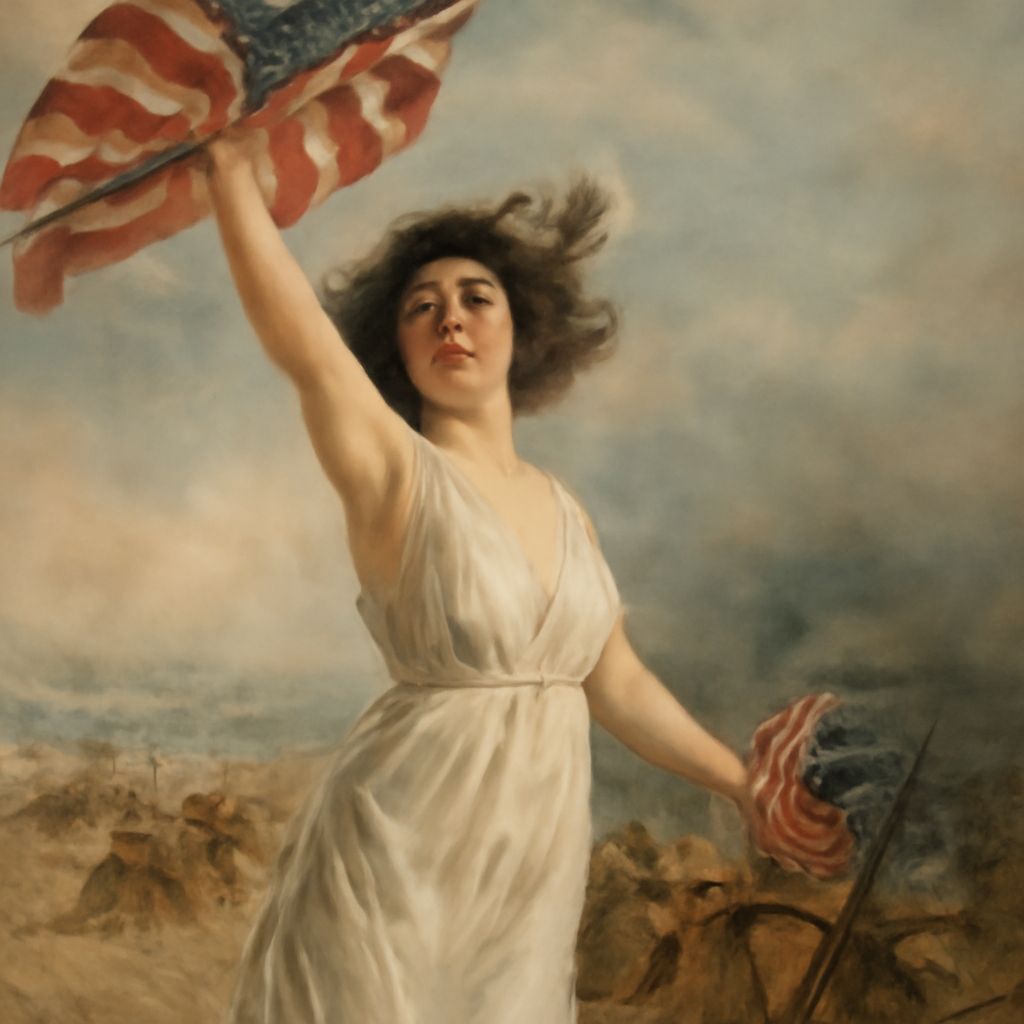
American propaganda in World War I turned a distant European conflict into personal duties: enlist, lend money, produce goods, conserve food, and support soldiers. American World War I propaganda worked through posters, newspaper copy, films, speeches, and the Four Minute Men, but the poster made policy visible in a single glance.
Recruitment posters asked men to serve; Liberty Loan posters asked households to finance the war. Together, they translated national mobilization into a direct call to an individual.
American Propaganda in World War I: Mobilizing a Nation
The United States entered the war in April 1917, then had to build an army, supply allies, and persuade citizens that sacrifice was necessary. Mobilization therefore joined military policy to civilian campaigns: the Selective Service system sought soldiers, the Treasury sold Liberty Loans, and agencies urged factories to increase output and families to conserve food and fuel.
The Committee on Public Information (CPI), created in 1917, coordinated much of the federal publicity effort under George Creel. It supplied news, pamphlets, films, and poster material, while its Four Minute Men delivered short pro-war talks in theaters and meeting halls.
This was not one perfectly centralized poster machine. The Army, Navy, Treasury, American Red Cross, local Liberty Loan committees, and private groups sponsored different messages. The common goal was to make national policy feel immediate, moral, and personal.
Recruitment Posters: “I Want You” and Service Appeals
The best-known recruitment image is James Montgomery Flagg’s “I Want You for U.S. Army.” First used in 1917, it shows Uncle Sam pointing directly at the viewer. The sponsor and requested action are clear: the Army wants eligible men to enlist, and the direct gaze makes each male viewer feel singled out.
Its short slogan turns national service into a personal summons. Uncle Sam, a familiar national personification, stands for the government but also borrows the authority of an older citizen addressing a younger one. The white space and bold lettering make the message legible at a distance.
A different service appeal appeared in Howard Chandler Christy’s Navy poster, “Gee!! I Wish I Were a Man. I’d Join the Navy.” Its stylish, viewer-facing woman was aimed at men, using admiration and gender pressure rather than Uncle Sam’s command. The contrast shows that recruitment propaganda could change tone while keeping the requested action—enlist.
Buy War Bonds Poster Campaigns: Liberty Loans and Varied Appeals
Liberty Loan posters addressed people who could not or would not enter uniform. Their sponsor was the Treasury’s bond program, but production and distribution often involved separate loan drives, regional committees, artists, and printers. A buy war bonds poster was therefore part of a broader financing campaign, not proof of a single agency or design formula.
In James Montgomery Flagg’s “Beat Back the Hun with Liberty Bonds,” a charging American soldier and violent battlefield language connect a civilian purchase with military defense. The emotional appeal is urgency and fear: buying becomes a way to stop the enemy before it reaches American homes. The requested action is financial—buy a bond—yet the poster gives it the moral weight of combat.
Other Liberty Loan designs used substitution rather than threat. “If You Can’t Enlist, Invest” offered civilians a respectable form of service and reached women, older men, workers, and anyone excluded from military enlistment. Bond campaigns also used flags, eagles, soldiers, mothers, and children to frame saving as patriotism. Because each drive had its own needs and sponsor network, the same symbol could carry different emphasis.
Design Tactics: Audience, Symbols, Emotion, and Action
Audience was the first design decision. Army recruiters selected eligible men; Navy imagery used masculine competition; bond drives widened the audience to nearly every household.
Sponsors shaped credibility. A government seal, Treasury loan language, or military uniform told viewers who stood behind the request. Yet local committees could adapt a national slogan to local events and sales goals.
Slogans supplied the verbal shortcut. “I Want You” uses second-person address; “If You Can’t Enlist, Invest” uses an alternative; “Beat Back the Hun” uses an imperative verb. Each removes uncertainty about what to do.
Symbols supplied instant meaning. Uncle Sam personified the state; the flag marked national belonging; the soldier visualized danger; and the home or family made the cost intimate. Bright colors, large type, and frontal faces helped posters compete with street noise and passing crowds.
Emotion then converted recognition into behavior. Pride encouraged enlistment, shame challenged the able-bodied man, fear dramatized invasion, and tenderness linked bonds to loved ones. The final request was always concrete: enlist, buy bonds, work harder, or conserve supplies.