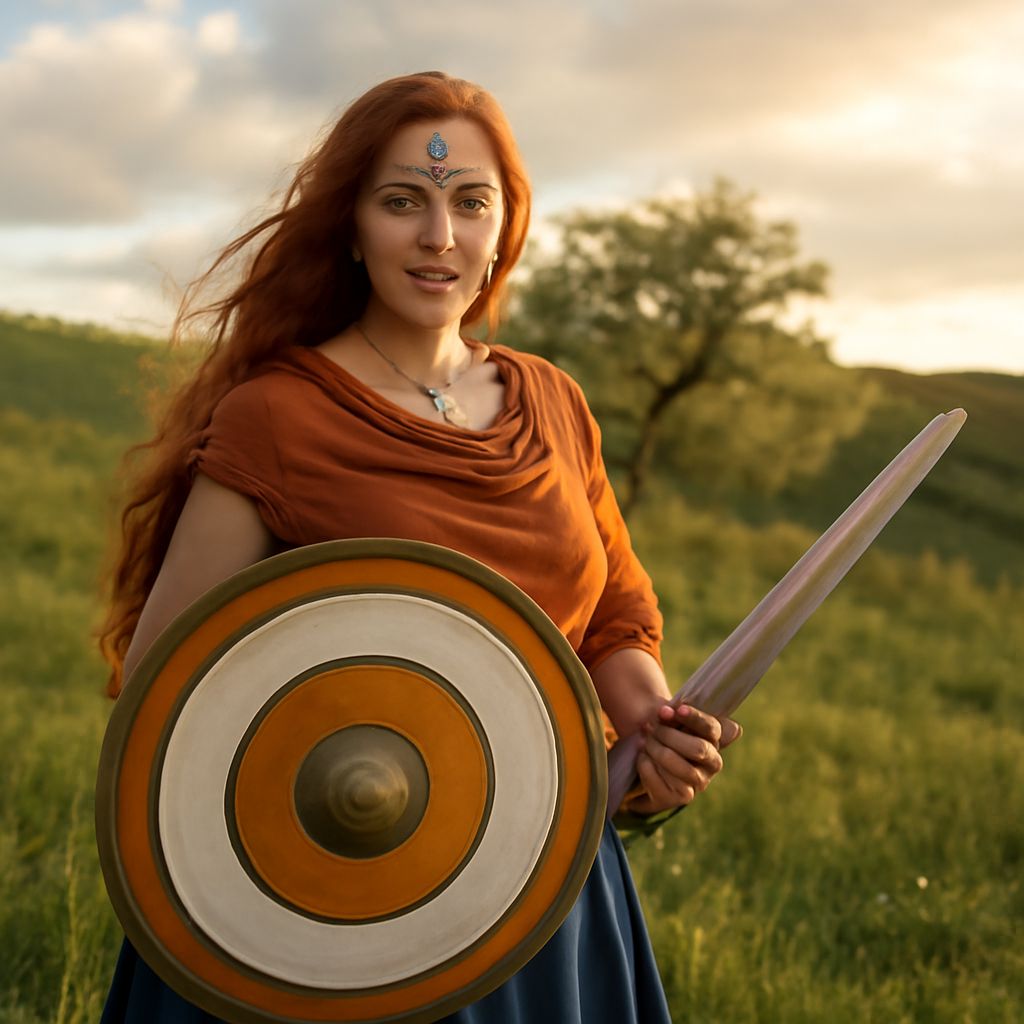
Boudica, the legendary Celtic warrior queen, remains a symbol of resistance and defiance against oppression. Known primarily for leading a significant rebellion against Roman rule in Britain, she has captured the imagination of historians and the public alike. Her story is one of courage, tragedy, and enduring legacy.
Early Life and Rise to Power
Boudica was born into the Iceni tribe, one of the Celtic tribes in Britain. Her early life remains shrouded in mystery, but she was likely raised in a culture steeped in warrior traditions and fierce independence. Boudica became queen following her marriage to Prasutagus, the king of the Iceni, who maintained a precarious alliance with the Romans. Upon his death, the Romans ignored his will, which left his kingdom jointly to his daughters and the Roman emperor, seizing the lands and wealth, and brutally mistreating Boudica and her family. This injustice was a catalyst for Boudica’s rise as a leader.
The Rebellion Against Rome
Fueled by a desire for vengeance and liberation, Boudica led a rebellion that would shake the foundations of Roman control in Britain. Around AD 60 or 61, she rallied various tribes, igniting a widespread uprising. Her forces first targeted the Roman settlement of Camulodunum (modern Colchester), razing it to the ground, followed by the destruction of Londinium (London) and Verulamium (St. Albans). The rebellion took the Romans by surprise, resulting in the slaughter of thousands and the temporary collapse of Roman governance in the region.
Boudica’s forces met their final stand against the Roman army led by Governor Suetonius in a battle whose exact location remains uncertain, possibly somewhere along Watling Street. Despite the overwhelming numbers and fierce resistance, the Roman military discipline and strategy overcame the rebellion. Boudica’s fate remains a subject of debate, with some suggesting she took poison to avoid capture.
Boudica’s Legacy
The legacy of Boudica, the warrior queen, is one of enduring inspiration and cultural significance. As a symbol of resistance against oppression, she has been immortalized in literature, art, and public monuments, including a striking statue near Westminster Bridge in London. Her story resonates with themes of courage and the struggle for justice, embodying the spirit of defiance that continues to inspire movements and individuals globally.
Boudica’s rebellion highlighted the vulnerabilities in the Roman occupation and the fierce independence of the Celtic tribes. While the uprising ultimately failed, it left a lasting impact on Roman policies in Britain, leading to more conciliatory approaches in some regions. Her story serves as a poignant reminder of the complexities of colonial rule and the relentless pursuit of freedom.
Myths and Historical Interpretations
The story of Boudica, the Celtic queen, is steeped in myth and varying historical interpretations. Many details of her life and rebellion have been romanticized or debated over the centuries. Ancient sources, primarily Tacitus and Cassius Dio, provide accounts that blend historical facts with dramatic embellishments, portraying Boudica as both a fierce warrior and a tragic heroine.
Modern interpretations continue to analyze her motivations, the scale of the rebellion, and its impact. Some historians view Boudica as a symbol of proto-feminism, leading a revolt in a male-dominated era, while others focus on the broader socio-political implications of her uprising. The myths surrounding her life, including her fiery speeches and tragic end, serve to enhance her status as an iconic figure in history.
Whether seen as a warrior queen or a martyr, Boudica’s narrative invites reflection on themes of power, resistance, and the enduring quest for justice.