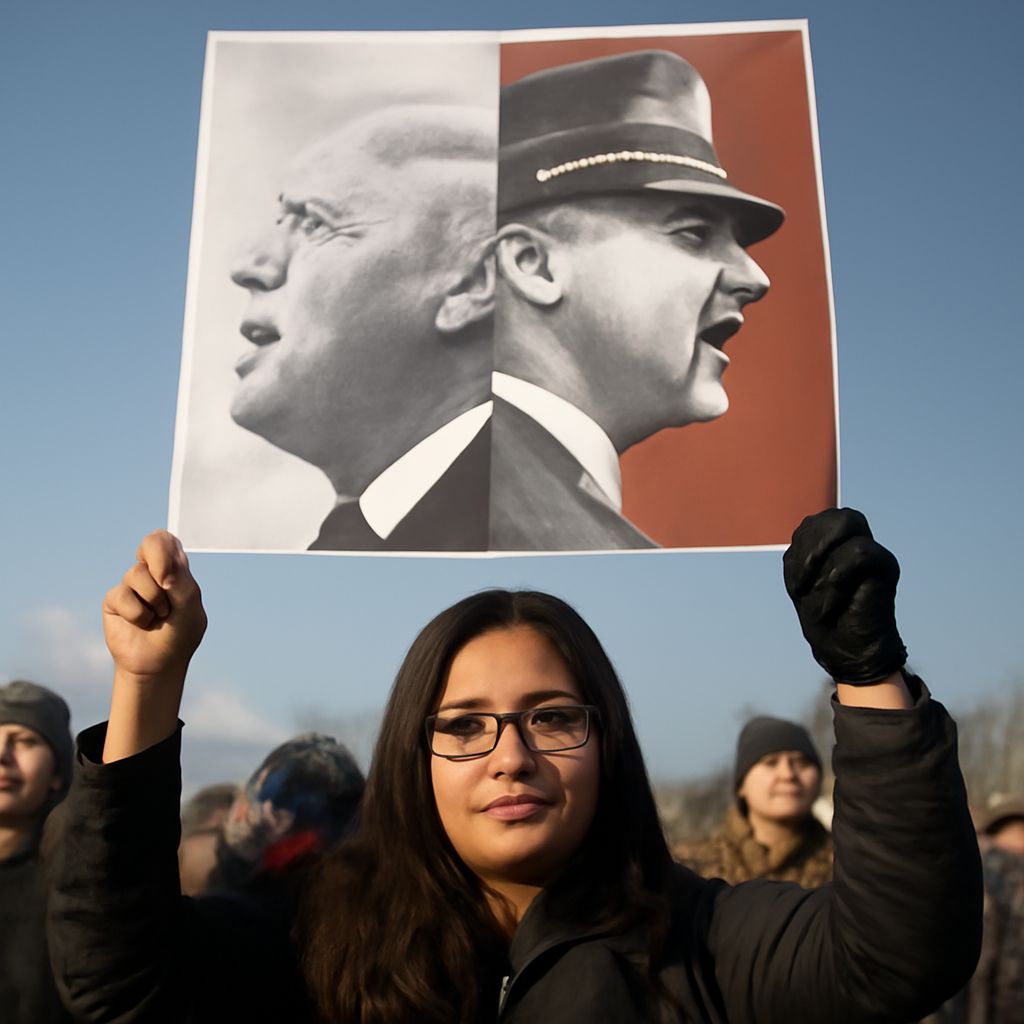
Is Trump a fascist? This question has sparked intense debate among political analysts, historians, and the general public. To answer it, we need to explore the definition of fascism, examine Donald Trump’s political actions, compare him with historical fascist leaders, consider expert opinions, and understand public perception.
Defining Fascism
Fascism is a complex and often misunderstood political ideology. It typically involves authoritarian nationalism, the rejection of democracy, and the suppression of political opposition. Fascists often promote a strong, centralized power and a dictatorial leader, while emphasizing aggressive nationalism and, sometimes, racism.
Trump’s Political Actions
Donald Trump’s political career has been marked by several actions that critics argue align with fascist principles. For example, his administration’s approach to immigration, characterized by strict policies and rhetoric against certain ethnic groups, drew comparisons to fascist regimes. Additionally, his challenges to the media, promotion of nationalistic sentiments, and attempts to undermine electoral integrity have sparked concerns.
However, supporters claim that Trump’s actions are within the boundaries of democratic governance and attribute his policies to a strong stance on national security and economic interest.
Comparisons with Historical Fascists
Comparing Trump to historical fascist leaders like Benito Mussolini or Adolf Hitler requires careful consideration. While both Mussolini and Hitler exhibited extreme authoritarian control, militarism, and systemic oppression, Trump’s presidency did not demonstrate the same level of centralized power or totalitarian control.
Trump’s approach lacked the expansive state control and widespread violence that characterized traditional fascist governments. While some of his tactics resembled those used by historical fascists, critics argue that these do not fully meet the criteria necessary to label him as a fascist.
Expert Opinions
Experts remain divided on whether Trump can be classified as a fascist. Some political scientists and historians argue that his rhetoric and policies exhibit fascist tendencies. They cite his use of populist rhetoric, demonization of opponents, and encouragement of violence as red flags.
Others maintain that labeling Trump as a fascist oversimplifies the issue. They argue that while he may employ authoritarian-style tactics, his adherence to democratic processes, such as holding elections and limited term presidency, contradicts the fundamental tenets of fascism.
Public Perception and Impact
Public perception of Trump as a fascist varies greatly. Some view him as a champion of American values, while others see him as a threat to democracy. The debate over whether Trump is a fascist has significantly impacted political discourse in the United States, contributing to polarization and influencing voter behavior.
The impact of this perception extends beyond politics, affecting social relationships, media narratives, and civic engagement. Whether or not Trump can be definitively labeled a fascist, the discussion itself highlights the need for vigilance in preserving democratic norms and values.