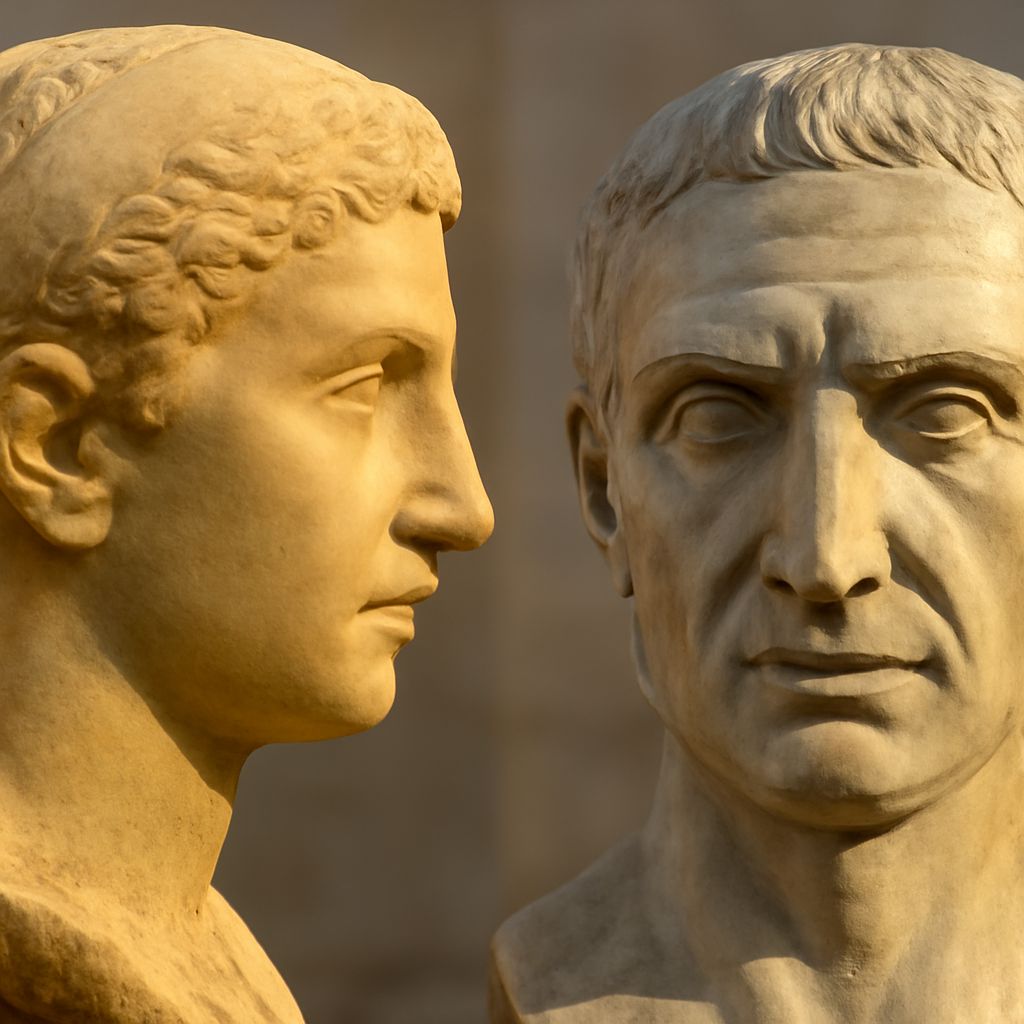
Marc Antony stands out as one of Ancient Rome’s most famous figures—a skilled general, powerful politician, and key player in the dramatic events that shaped the final years of the Roman Republic. His life was marked by ambition, loyalty, and legendary alliances, most notably with Julius Caesar and the Egyptian queen Cleopatra. The intertwined stories of marc antony, cleopatra mark antony, and mark antony julius caesar have inspired countless works of literature and drama, revealing a tale of love, rivalry, and the relentless pursuit of power.
Who Was Marc Antony?
Marc Antony (Marcus Antonius) was born in 83 BCE into a prominent Roman family with a strong military tradition. He quickly distinguished himself as a soldier, serving with distinction in campaigns in the East. By his late 20s, Antony had already earned a reputation for bravery and charisma, which helped him enter the political sphere of Rome during a time of intense civil strife.
Antony’s political career accelerated when he allied himself with Julius Caesar during Caesar’s rise to power. As a trusted supporter, Antony served as Caesar’s right-hand man in both politics and war. His skills in negotiation, oratory, and battle made him indispensable during Caesar’s dictatorship, leading to his appointment as consul in 44 BCE. Antony’s early life and personality—marked by energy, lavish living, and a magnetic presence—set the stage for his future alliances and rivalries.
After Caesar’s assassination, Marc Antony became one of Rome’s most powerful men. His ambition and military prowess positioned him at the center of the ensuing power struggles that would define the fate of the Republic. Antony’s decisions and alliances in the years following Caesar’s death would not only shape his own destiny but also change the course of Roman history.
Marc Antony and Cleopatra
The romance between marc antony and cleopatra is one of history’s most iconic love stories. Cleopatra VII, the last active ruler of the Ptolemaic Kingdom of Egypt, met Marc Antony in 41 BCE. Their attraction was immediate and mutual, but their relationship went far beyond personal affection—it was a partnership forged in the fires of political necessity.
For Cleopatra, an alliance with Antony offered protection and influence in the increasingly Roman-dominated Mediterranean world. For Antony, Cleopatra was a source of immense wealth, military support, and legitimacy as he vied for power against his rivals in Rome. Together, they formed a powerful and controversial union that alarmed the Roman elite.
Marc Antony cleopatra shared not only love but also ambition. They had three children together and publicly presented themselves as rulers of a new Eastern empire. The couple’s open display of their partnership—Antony even granted territory to Cleopatra and her children—enraged his Roman enemies, especially Octavian (the future Augustus). Propaganda painted Antony as a traitor enthralled by a foreign queen, fueling tensions that would lead to war.
Their partnership ultimately proved fatal. In 31 BCE, Antony and Cleopatra’s combined forces were defeated by Octavian at the Battle of Actium. Facing inevitable defeat, both Antony and Cleopatra took their own lives—their dramatic end cemented their legacy as tragic lovers, but also as pivotal figures in the end of the Roman Republic.
Relationship with Julius Caesar
The bond between mark antony julius caesar was both personal and political. Antony first met Caesar during his military service and quickly became one of his most loyal lieutenants. Their relationship deepened as Antony supported Caesar in his quest to centralize power, particularly during the Civil War against Pompey and the Senate’s conservative faction.
Antony’s support was critical to Caesar’s success. He commanded troops, negotiated with political rivals, and managed affairs in Rome during Caesar’s campaigns abroad. In 44 BCE, Antony served as consul alongside Caesar—the highest elected office in Rome—demonstrating his trust and standing within Caesar’s inner circle.
After Caesar’s assassination on the Ides of March, Antony acted swiftly to secure Caesar’s legacy and protect his own position. He gave Caesar’s funeral oration, famously turning public opinion against the conspirators and sparking further unrest. Antony then formed the Second Triumvirate with Octavian and Lepidus to defeat Caesar’s killers and restore order, but tensions with Octavian soon led to civil war. The alliance and eventual rivalry between Antony and Octavian would decide the fate of Rome’s future leadership.
Marc Antony’s Impact and Legacy
Marc Antony’s influence on history reaches far beyond his lifetime. Through his alliances, both political and romantic, he shaped the final years of the Roman Republic and set the stage for the rise of the Roman Empire. His relationship with Cleopatra and role as Caesar’s trusted aide make him a symbol of both loyalty and tragic ambition.
Antony’s failures and successes illustrate the volatility of Roman politics in his era. His willingness to challenge Roman traditions—by allying with a foreign queen, dividing the empire, and pursuing personal power—marked him as both a visionary and a cautionary figure. The defeat at Actium and the collapse of his Eastern ambitions paved the way for Octavian, who would become Augustus, Rome’s first emperor.
Yet, Antony’s story remains compelling for its blend of personal passion and historical consequence. His dramatic life—shaped by love, loyalty, rivalry, and ambition—continues to fascinate scholars, artists, and readers alike. The tales of marc antony, cleopatra mark antony, marc antony cleopatra, and mark antony julius caesar endure as powerful reminders of how individual lives can change the course of history.