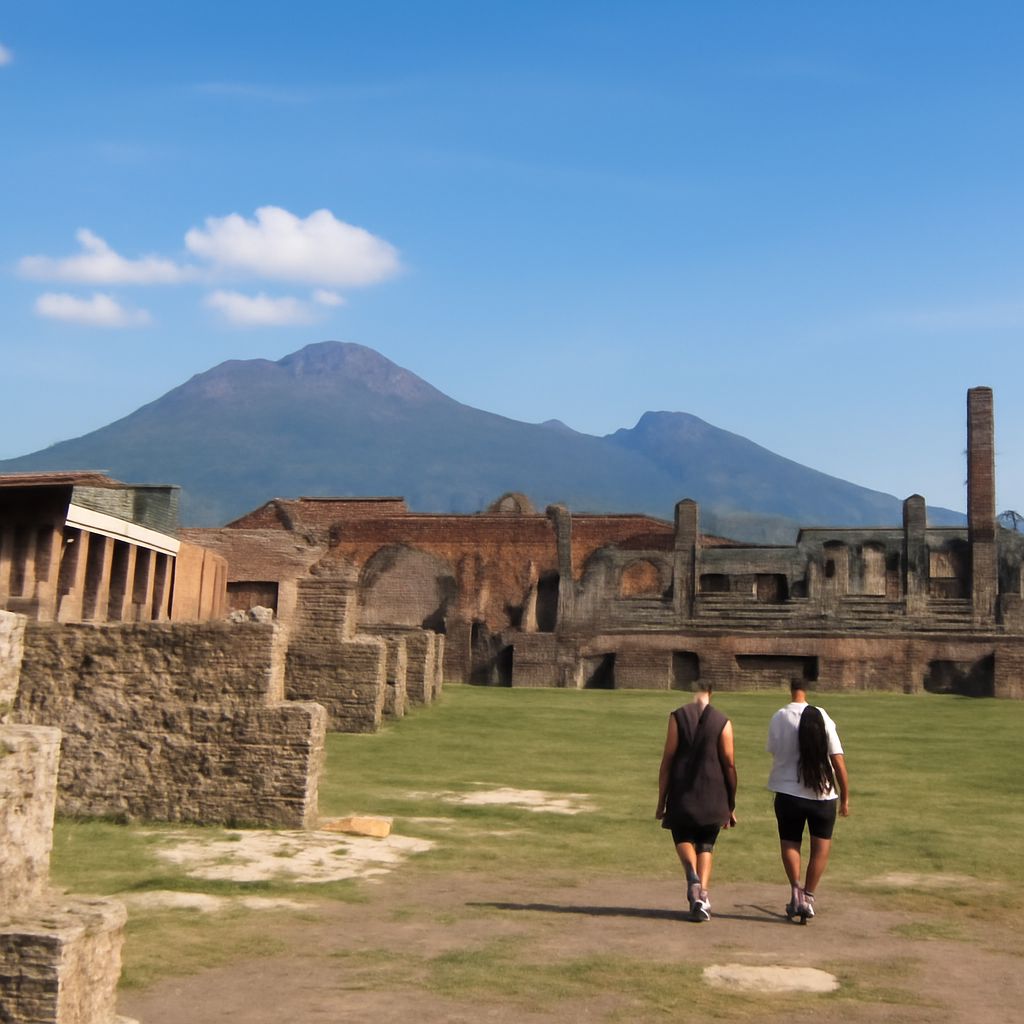
Mount Vesuvius looms over the ancient city of Pompeii, serving as a somber reminder of the catastrophic eruption that occurred in AD 79. This volcanic explosion not only buried the city under a blanket of ash but also preserved it for centuries, providing a snapshot of Roman life. The history of Mount Vesuvius and its eruption offers insight into the ancient world and its public offices, while ongoing preservation efforts continue to protect this remarkable site.
Mount Vesuvius Eruption
The eruption of Mount Vesuvius in AD 79 was one of history’s most devastating volcanic events. It spewed a massive cloud of pumice, ash, and gases high into the sky, which then settled over Pompeii. The city was quickly buried under several meters of debris, sealing its fate. The eruption lasted approximately 24 hours, with the most intense phase occurring in the early morning hours, suffocating and entombing the citizens who had not evacuated in time.
Impact on Pompeii
The impact of Mount Vesuvius’s eruption on Pompeii was both immediate and long-lasting. Buildings collapsed under the weight of ash and pumice, and life in the city was abruptly halted. Pompeii’s infrastructure, including homes, shops, and streets, remained frozen in time, providing a unique archaeological treasure trove. Excavations have revealed detailed frescoes, everyday objects, and even casts of victims, offering a remarkable glimpse into Roman daily life and culture.
Public Offices in Pompeii
Pompeii was a bustling urban center with well-organized public offices that played vital roles in city administration. These offices, including the Curia and the Basilica, were central to governance and legal affairs. The Curia was the meeting place for the city council, where policy decisions were made, while the Basilica served as a hub for commerce and justice. The preservation of these structures, along with written records found on site, sheds light on the sophisticated nature of Roman public administration.
Preservation Efforts
Today, preservation efforts are crucial to safeguarding Pompeii for future generations. Archaeologists and conservators work meticulously to stabilize structures and protect them from the elements, ensuring the site remains accessible and informative. Modern techniques, such as digital mapping and 3D reconstruction, aid in the preservation process, allowing for detailed analysis without further intrusion. These efforts help maintain Pompeii as a valuable educational resource and a testament to the resilience of historical preservation.