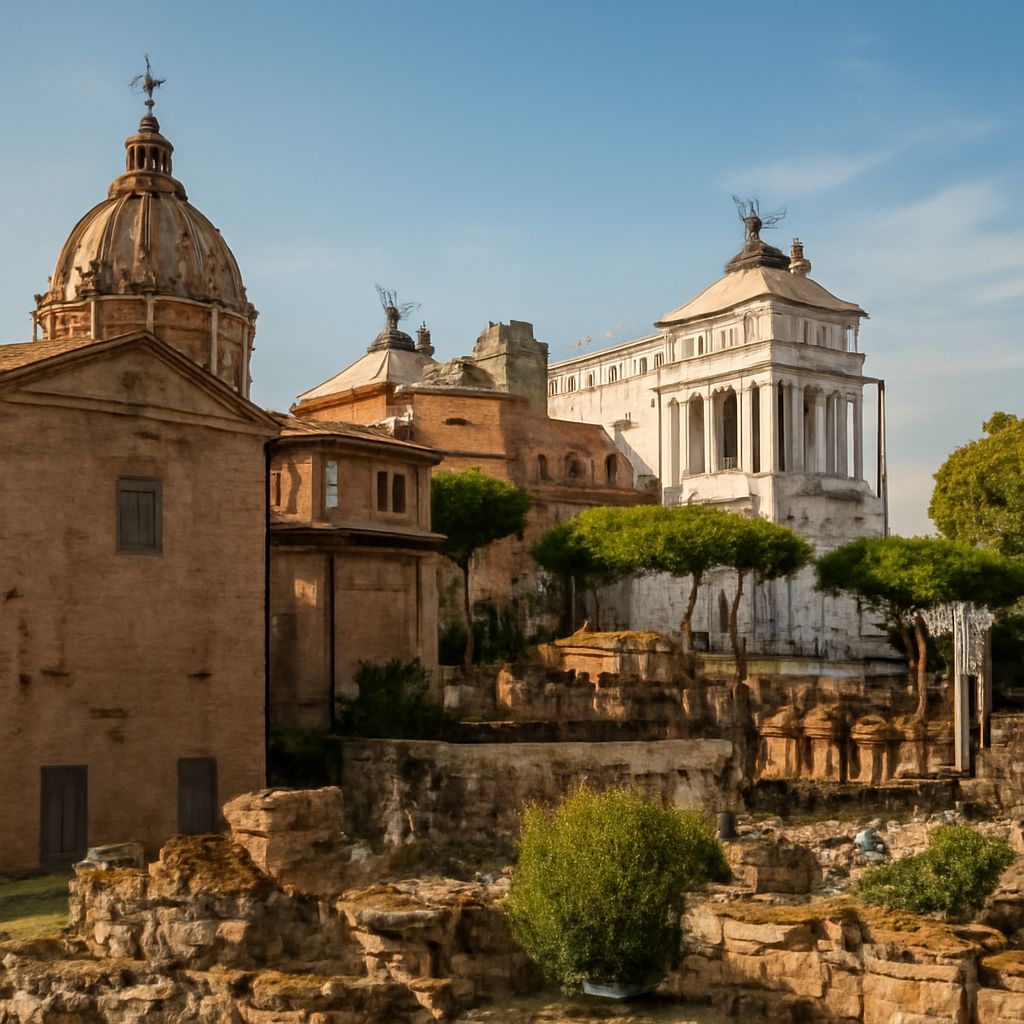
The Roman Forum was the heart of ancient Rome, serving as the central hub for politics, religion, commerce, and social life. Located in a valley between the Palatine and Capitoline hills, the forum in Rome was the site where citizens gathered for centuries to make decisions and celebrate the achievements of the Roman state. Today, the ruins of the roman forum offer a powerful window into the daily lives and grand ambitions of one of history’s most influential civilizations.
What Was the Roman Forum?
The Roman Forum, or Forum Romanum, was the main public square of ancient Rome. From its origins in the 7th century BCE, it developed into the center of the city’s political, economic, and religious activities. It was where triumphal processions were held, laws were debated, and Romans assembled to witness speeches, ceremonies, and trials.
Unlike a modern plaza or city center, the forum ancient Rome was a dense collection of temples, basilicas, government buildings, and open spaces. The layout changed over time as new emperors added their own monuments and shifted the focus of civic life. Still, the roman forum retained its symbolic importance as the site where Rome’s identity and power were on display.
For most Romans, visiting the forum was part of daily life. It was both a marketplace—packed with traders and buyers—and a stage for statecraft, where the fate of the Republic and Empire was debated. The forum’s location, nestled between some of Rome’s most important hills, added to its prestige and convenience for citizens from all parts of the city.
Throughout the centuries, the forum in Rome grew in size and complexity. By the height of the Empire, it was surrounded by several other forums, but the original area remained the ceremonial heart of the city.
Key Buildings and Monuments
The forum was home to many of ancient Rome’s most important structures, each serving a unique function in public and religious life. Several buildings have become iconic symbols of Rome’s grandeur, even in their ruined state today.
The Curia Julia was the Senate house where the most important political debates took place. Its brick walls and simple design reflected the seriousness of Roman government. Nearby stood the Rostra, the speaker’s platform adorned with ship prows, from which orators addressed the crowd.
The forum ancient Rome also featured major temples, such as the Temple of Saturn, known for its tall columns and role in housing the state treasury. The Temple of Vesta, with its circular footprint, was the home of the Vestal Virgins and the sacred fire of Rome. Other notable temples included those dedicated to Castor and Pollux, Concord, and Venus and Roma.
Basilicas, large public halls, lined the forum as well. The Basilica Julia and Basilica Aemilia were centers for legal proceedings and business transactions. The Arch of Septimius Severus and the Arch of Titus marked military victories and honored emperors. Statues, columns, and memorials filled the open spaces, reminding visitors of Rome’s accomplishments and heroes.
The Forum’s Role in Roman Civic Life
The forum in Rome was much more than an architectural showcase; it was the stage on which public life unfolded. Political assemblies, legal cases, and religious festivals all took place within its boundaries. During the Republic, citizens gathered here to vote on laws and elect magistrates. The forum also hosted funerals of great statesmen, where eulogies inspired the next generation.
Markets and shops crowded the edges of the forum, making it a center for commerce as well as politics. Merchants sold everything from food and spices to luxury goods imported from across the Empire. This daily business mixed with the formal processions, ceremonies, and debates happening nearby, giving the forum a constant buzz of activity.
Major religious holidays and triumphal parades used the forum as their focal point. Victorious generals and emperors would process along the Via Sacra, the forum’s main street, with crowds cheering their victories. Temples and altars hosted important rituals, linking the power of Rome to the favor of the gods and the memory of ancestors.
The forum ancient Rome thus embodied the unity of religion, government, and society. Its open spaces allowed for gatherings that shaped the destiny of the city and its empire. Even as the Empire expanded and power shifted, the forum remained the symbolic center of Roman identity.
Legacy and Visiting Today
The roman forum’s influence is still felt in the modern world. Its layout and buildings inspired public spaces across Europe and beyond. Concepts like the basilica and senate house have shaped Western ideas of law, civic order, and architecture. The forum’s ruins are among the most visited historical sites in Rome, drawing millions each year to walk the same ground as Julius Caesar, Augustus, and Cicero.
Visiting the forum in Rome today offers a unique experience. While many structures have collapsed or eroded over time, enough remains to give a sense of the ancient city’s scale and ambition. Key sites include the standing columns of the Temple of Saturn, the reconstructed Curia, and the ornate reliefs of the triumphal arches. Guided tours help bring this history to life, explaining the significance of each monument and the broader story of Rome.
Access to the roman forum is included with tickets to the Colosseum and the Palatine Hill. The best time to visit is early in the morning or late afternoon, when crowds thin and the ruins glow in the Roman sunlight. Comfortable shoes are recommended, as the ancient paving stones and uneven surfaces can be tricky to navigate.
For anyone interested in ancient history, politics, or architecture, the forum ancient Rome is an essential destination. It remains a vivid testament to the achievements and daily life of the people who built the Roman Empire.