The Sons of Liberty were loosely connected colonial protest groups that opposed British taxation and imperial control, especially from 1765 until the American Revolution began. They organized public resistance, pressured officials, and helped turn opposition to the Stamp Act into a wider movement.
The phrase “who are the sons of liberty” describes a network, not one national organization with a fixed membership list. Their actions and the symbols associated with them helped colonists express a shared political identity before independence.
Who Are the Sons of Liberty? Origins, Tactics, and Role
Local Sons of Liberty groups formed in several colonies after Parliament passed the Stamp Act in 1765. The name became popular after Irish-born parliamentarian Isaac Barré used it to describe American colonists defending their rights. Boston and New York developed especially active chapters.
The movement had no single commander. Local merchants, printers, lawyers, artisans, and political organizers chose their own methods, although figures such as Samuel Adams and John Hancock became closely associated with the cause. Membership also changed from one colony to another.
Their tactics included mass meetings, petitions, printed essays, nonimportation campaigns, effigy displays, and public demonstrations. They sometimes used threats and mob action against stamp distributors and other officials. In Boston, protesters destroyed property connected with Lieutenant Governor Thomas Hutchinson in 1765.
These groups made resistance visible and costly for British authorities and colonial supporters of imperial policy. They helped coordinate opposition to the Stamp Act, Townshend duties, and Tea Act, contributing to events such as the Boston Tea Party in 1773. They were not the only force behind the Revolution, but they helped build habits of protest and political cooperation before the war.
American Revolutionary War Flags: Designs and Messages
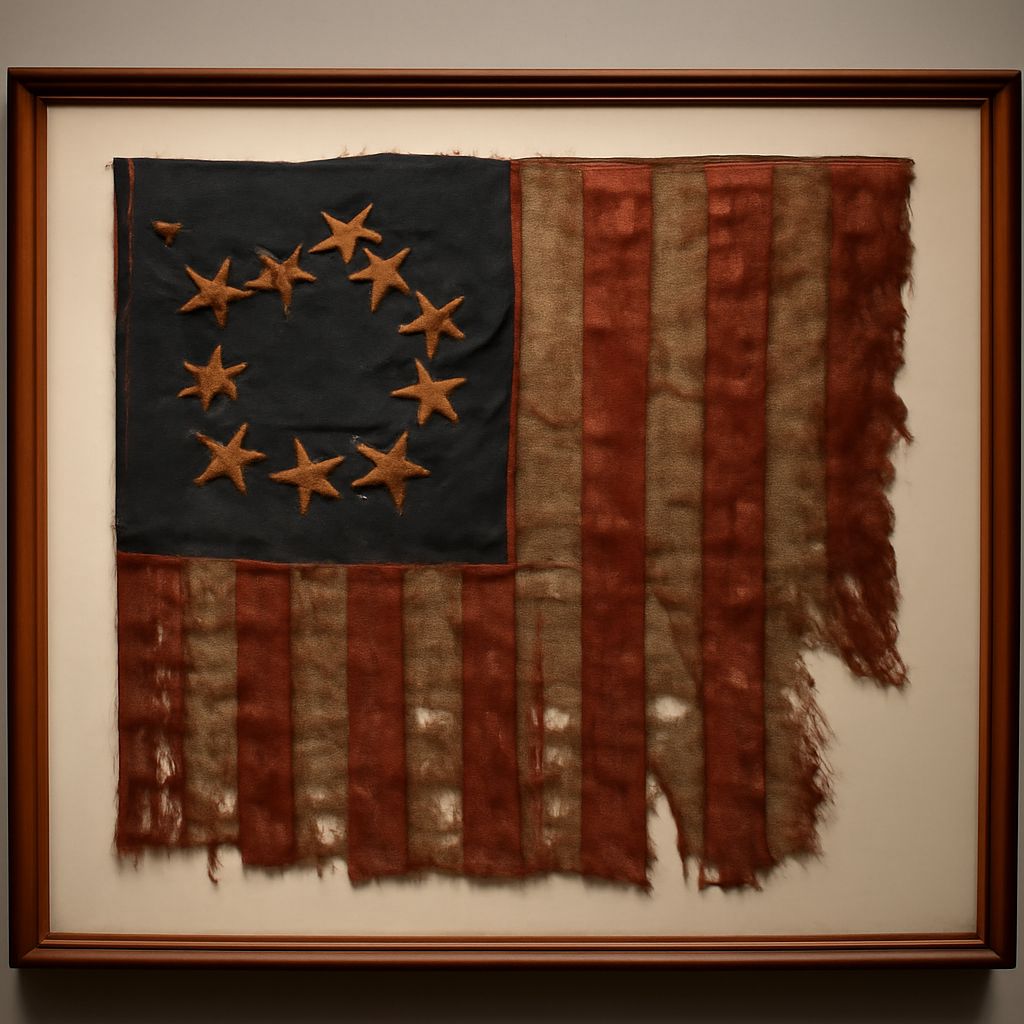
The broad label american revolutionary war flags covers military, naval, local, and political banners rather than one official design used everywhere. Many flags represented a regiment, colony, ship, or protest cause. Their colors and words signaled resistance, unity, vigilance, or loyalty to a particular community.
The Grand Union flag, used by Continental forces from late 1775, combined 13 red-and-white stripes with the British Union flag in its canton. It showed that the colonies were acting together while still leaving their final relationship with Britain unresolved. It is often called the Continental Colors.
The Stars and Stripes became the official national flag through a Continental Congress resolution on June 14, 1777. Its 13 stars and 13 stripes represented the united states, although early versions differed in the arrangement of their stars. The design marked a shift from protest within the empire toward an independent national identity.
The Gadsden flag used a coiled rattlesnake above the warning “Don’t Tread on Me.” Associated with Benjamin Franklin’s earlier snake imagery and used by naval forces, it communicated vigilance and a readiness to defend against coercion. It was a resistance emblem, not the national flag of the new United States.
The Appeal to Heaven flag displayed a green pine tree and words drawn from the language of justified resistance. Used in New England and associated with colonial forces and ships, it connected local identity with the belief that people could resist a ruler who violated their rights. These examples show why no single Revolutionary War banner should be treated as the only official symbol of the period.
The Hat of the French Revolution: The Phrygian Cap
The Phrygian cap was a soft, close-fitting cap with a rounded or forward-bent top. Its link to liberty came partly from ancient Roman imagery, in which a similar cap, sometimes called a pileus, represented the release of enslaved people. The French Revolution revived and reshaped that older symbol.
French revolutionaries commonly used a red version called the bonnet rouge, or red liberty cap. It appeared on political prints, public monuments, flags, poles, and the heads of some activists. The cap became strongly associated with the sans-culottes and with popular sovereignty rather than royal authority.
Wearing or displaying the cap could communicate support for the Revolution and its claims of liberty, equality, and citizenship. It was not simply everyday clothing, and not every revolutionary wore one. Its meaning depended on where it appeared and which political group displayed it.
The cap also had an American counterpart in earlier liberty imagery, including colonial seals, coins, and political illustrations. The difference was emphasis: American flags often represented colonies joining in a common cause, while the French cap made political allegiance visible on the individual body and in the crowd.
What Revolutionary Symbols Accomplished
The Sons of Liberty organized people and actions; flags and caps helped make those actions recognizable. A banner could identify a regiment or ship at a distance, while a cap could mark a person as part of a revolutionary crowd. Both turned an abstract idea such as liberty into a visible sign.
These symbols also spread arguments without requiring a long speech. A rattlesnake warned against control, a pine tree linked resistance to New England, and the Phrygian cap suggested freedom from political subordination. Their repeated use helped supporters recognize one another and made revolutionary claims harder for authorities to ignore.
Their meanings were never completely fixed. The same flag or cap could unite supporters, intimidate opponents, or be criticized as a threat to order. That flexibility allowed revolutionary movements to create shared identity while adapting symbols to local struggles in America and France.