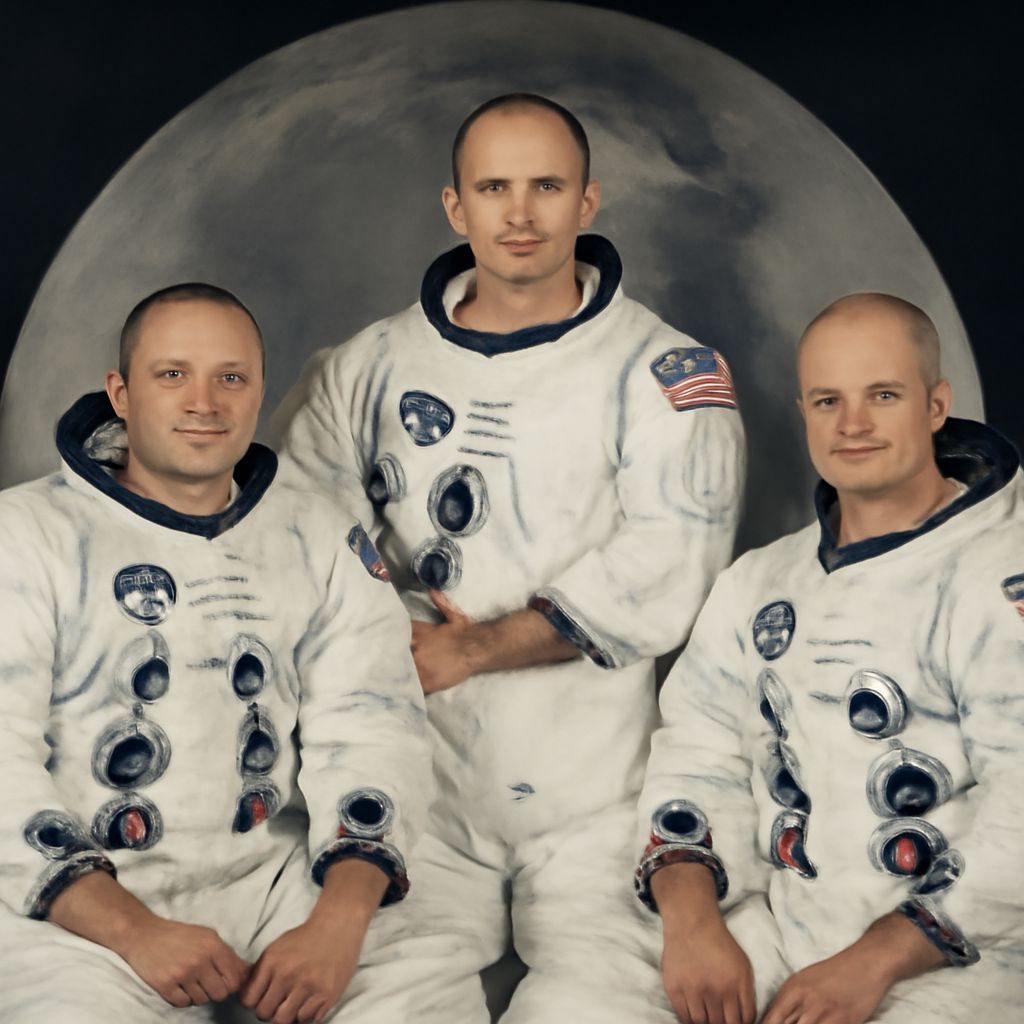
As of 2024, only 12 people have ever walked on the surface of the Moon. These astronauts made history during NASA’s Apollo missions more than 50 years ago. No human has been to the lunar surface since 1972, making the achievement of those who have an exclusive milestone in space exploration.
Understanding how many people have been on the Moon, who has walked there, and how many actually traveled to lunar orbit or landed, helps distinguish between those who visited the Moon closely and those who set foot on its surface. Here’s a complete breakdown of every astronaut who made the journey, the total number of moonwalkers, and why lunar visits remain rare.
The Exact Number of Moon Visitors
The answer to how many people have been on the Moon is 12. These individuals are the only humans in history to have physically walked on another world. Their landings took place during six successful Apollo missions carried out by NASA from 1969 to 1972.
Each Apollo lunar mission sent a crew of three astronauts to the Moon. Of those three, two would descend to the surface in the lunar module while the third stayed in orbit around the Moon, piloting the command module. Only the two lunar module crew members from each of the six successful missions became moonwalkers, while the third astronaut observed from above.
No woman, non-American, or private citizen has ever walked on the Moon as of 2024. All 12 moonwalkers were American men, and all journeyed during the era of the Apollo program. The feat remains exclusive due to the technical and financial challenges involved in sending humans to the Moon.
It’s important to note that while 12 people have walked on the Moon, a total of 24 astronauts have traveled from Earth to lunar orbit or passed behind the Moon. The distinction between walking on the surface and visiting the Moon is significant, as only half of those who traveled so far actually set foot on lunar soil.
Who Has Walked on the Moon?
The following list includes every astronaut who has walked on the Moon, along with the mission and date of their landing:
- Neil Armstrong (Apollo 11, July 1969) – The first human to set foot on the Moon.
- Buzz Aldrin (Apollo 11, July 1969) – The second person to walk on the Moon, following Armstrong minutes later.
- Charles “Pete” Conrad (Apollo 12, November 1969)
- Alan L. Bean (Apollo 12, November 1969)
- Alan Shepard (Apollo 14, February 1971) – The oldest person to walk on the Moon at age 47.
- Edgar D. Mitchell (Apollo 14, February 1971)
- David R. Scott (Apollo 15, July 1971)
- James B. Irwin (Apollo 15, July 1971)
- John W. Young (Apollo 16, April 1972)
- Charles M. Duke Jr. (Apollo 16, April 1972)
- Eugene Cernan (Apollo 17, December 1972) – The last person to walk on the Moon so far.
- Harrison H. Schmitt (Apollo 17, December 1972)
Each of these astronauts spent hours on the lunar surface, collecting rock samples, performing experiments, and leaving equipment for future scientific study. Their experiences resulted in the iconic photos and discoveries that defined the Apollo era. The list of who has walked on the Moon remains unchanged since 1972, though new missions are being planned for the future.
Most astronauts only walked on the Moon once. Eugene Cernan was the last human to leave the lunar surface, famously stating, “We leave as we came, and, God willing, as we shall return, with peace and hope for all mankind.” Harrison Schmitt was the only scientist (a geologist) among the moonwalkers, providing unique expertise for studying the lunar landscape.
No astronaut has returned to the Moon since Apollo 17, and as of now, all surviving moonwalkers are in their 80s or 90s. Several have passed away, but their legacies continue to inspire new generations of lunar explorers.
How Many People Went to the Moon?
While only 12 astronauts have walked on the Moon, a total of 24 people have gone to the Moon, meaning they traveled from Earth to lunar orbit or flew around its far side. These 24 astronauts participated in the Apollo missions from Apollo 8 to Apollo 17. Each mission, except Apollo 13 (which did not land), included a command module pilot who remained in lunar orbit while the others landed.
The breakdown is as follows:
- 24 astronauts traveled to the Moon between 1968 and 1972.
- 12 astronauts landed and walked on the surface.
- The remaining 12 orbited the Moon, performed essential mission duties, and supported their crewmates on the surface.
The Apollo 8 and Apollo 10 missions are special cases. Apollo 8 was the first crewed mission to orbit the Moon but did not land, while Apollo 10 tested the lunar module in a close fly-by above the surface. These missions paved the way for the successful landings that followed.
Apollo 13 famously suffered a life-threatening malfunction and could not attempt a landing, but its three crew members did fly around the Moon before returning safely to Earth. Thus, when asking how many people went to the Moon, the number includes all astronauts who passed lunar orbit—even if they did not land.
No astronaut has traveled beyond low Earth orbit since 1972. Planned Artemis missions by NASA and international partners aim to send astronauts back to the Moon within the next decade, which would increase the total number of lunar travelers and moonwalkers for the first time since the Apollo era.
Why Have So Few Visited the Moon?
There are several reasons why so few humans have visited the Moon. The most significant is the immense cost, complexity, and risk involved in sending people to another celestial body. The Apollo program cost billions of dollars and required years of research, engineering, and political commitment during the space race era.
Technical challenges included developing reliable rockets, life support systems, and lunar modules capable of landing and returning safely to Earth. Every mission demanded the coordination of thousands of engineers and scientists, and even small errors could have fatal consequences.
Political priorities also shifted after the initial success of Apollo 11. The last three planned Apollo missions (18, 19, and 20) were canceled, and resources were redirected toward other space initiatives, such as the Space Shuttle and the International Space Station. As a result, no new lunar landings have occurred for over 50 years.
Recent advances in technology, renewed international interest, and the promise of new scientific discoveries have reignited plans for lunar exploration. Upcoming missions may finally answer how many people have been on the Moon with new names and achievements, but for now, the number remains a remarkable and exclusive club of 12.