The American Revolution did not end diplomatically with the British surrender at Yorktown in 1781. That victory made negotiations possible, but the peace settlement required Britain and the United States to agree on independence, borders, and the claims left by years of war. The 1783 Paris treaty supplied that agreement.
What was the Paris treaty, and why did its terms matter after the fighting stopped? Signed on September 3, 1783, it recognized the United States as independent and set out obligations that both sides would struggle to fulfill. It was one part of a wider peace involving Britain’s European adversaries.
What Is the Treaty of Paris and Which War Did It End?
What is the Treaty of Paris in American Revolutionary history? It is the definitive peace agreement between Great Britain and the United States that ended their war for independence. Its name identifies the city of negotiation, so the date is essential: several different agreements bear the same name.
The treaty of Paris of 1783 should be distinguished from the 1763 Treaty of Paris, which concluded a different conflict, the Seven Years’ War. The earlier agreement expanded British territorial possessions in North America; the later one recognized the independence of former British colonies. The two settlements belong to a connected history, but they answered different diplomatic questions.
The National Archives transcription of the signed definitive treaty provides the complete text used here, including its preamble and ten articles. Reading the articles alongside a narrative is valuable because their specific promises do not all have the same force. Some are direct commitments; others ask Congress to recommend action by the states.
How the Parties Reached Agreement
The American commissioners John Adams, Benjamin Franklin, and John Jay negotiated with British representatives. On November 30, 1782, they signed preliminary articles that settled major issues, including independence and boundaries. Those articles were to form the basis of a final settlement, but the treaty was not to be concluded until Britain and France had also agreed on peace terms.
France had supported the American cause, while Spain and other powers had their own interests in the wider war. American and British negotiators therefore worked in a diplomatic setting larger than their bilateral dispute. The State Department’s Office of the Historian explains the negotiations and the relation between the preliminary and definitive agreements.
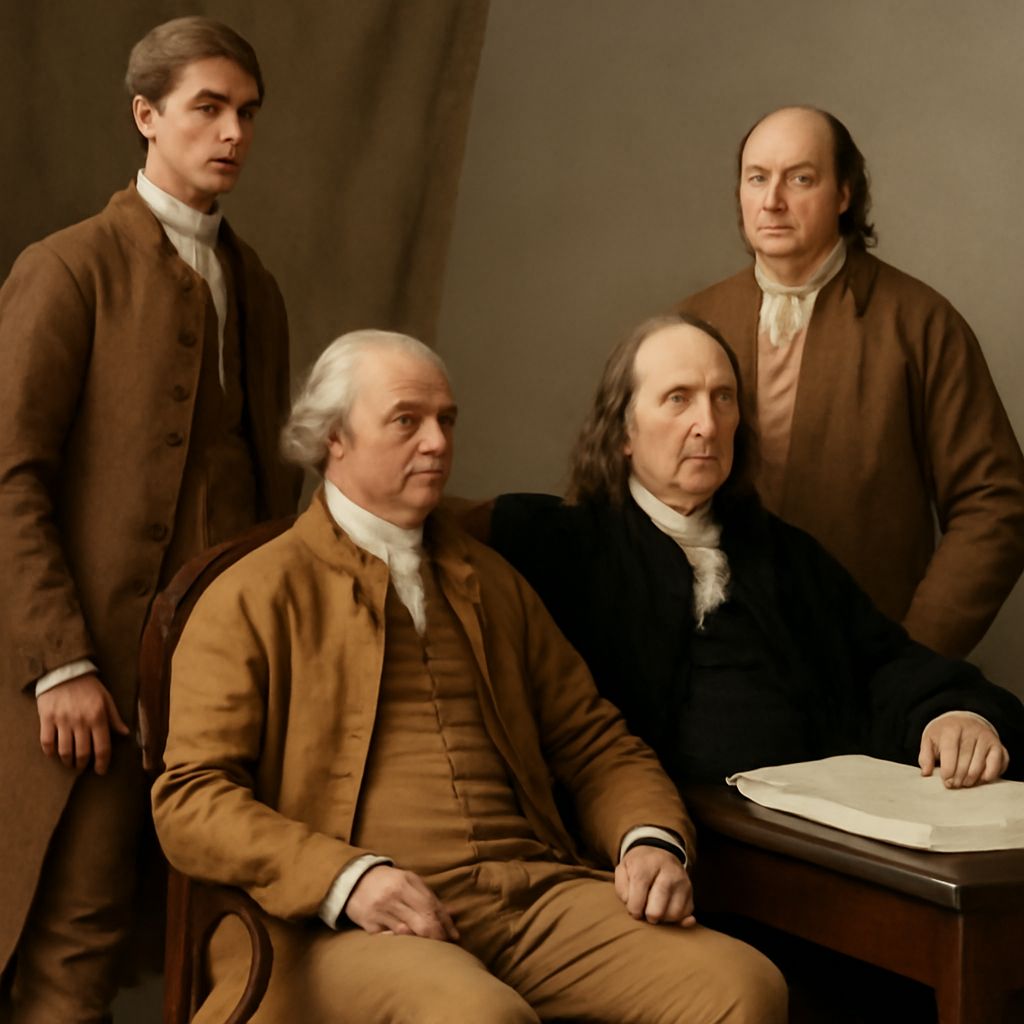
David Hartley signed the final document for Britain, and Adams, Franklin, and Jay signed for the United States. The treaty of Paris, 1783, confirmed the core terms of the preliminary agreement. Signing was a major diplomatic act; ratification and implementation were separate steps needed to put its commitments into effect.
Independence, Boundaries, and Other Terms
Article I recognized the thirteen named states as free, sovereign, and independent. Britain relinquished its claim to govern them. That recognition gave the outcome of the war a formal place in relations between the two governments and made the United States a party to a settlement with its former imperial ruler.
The boundary provisions described territory extending generally from the Atlantic to the Mississippi River, with a northern line through the Great Lakes region and a southern boundary near Spanish Florida. The treaty’s geographical descriptions were detailed, but applying them on imperfect maps and contested ground was another matter. The agreement also gave both countries access to navigation on the Mississippi.
Fishing mattered to coastal communities and to the negotiators who represented them. Article III acknowledged American fishing rights in specified waters, including the Grand Banks, and described places where Americans could dry and cure fish. It did not provide an unlimited right to fish or operate on every British shore; its wording identifies particular waters and conditions.
The treaty of Paris (1783) also addressed private obligations. Creditors on either side were to face no lawful obstacle to recovering bona fide prewar debts. Congress would recommend that state legislatures restore confiscated property to certain Loyalists, people who had remained loyal to Britain during the conflict. A recommendation was not the same as a guarantee that each state would return property.
Whose Claims Were Missing?
Native nations occupied and governed lands within the boundaries described by the settlement, yet they were not parties to the agreement between Britain and the United States. Drawing a boundary between those two powers did not settle Indigenous peoples’ claims to their homelands or obtain their consent to American expansion.
The Paris peace of 1783 therefore had consequences beyond the two signatories. American officials and settlers treated the western boundary as opening a vast area to U.S. claims, while Native communities continued to defend their lands and political independence. The diplomatic map and control on the ground were different matters, and conflict continued after the treaty.
What Remained Unresolved?
The settlement left difficult questions of enforcement. Some states obstructed the recovery of British debts, while Loyalists disputed the treatment of confiscated property. Britain retained posts in the Great Lakes region that the United States believed should have been evacuated. Each dispute gave the other side a reason to complain that the agreement was not being carried out.
These tensions persisted into the 1790s. The Office of the Historian’s account of the Jay Treaty describes later negotiations over British posts, debts, and other outstanding issues. The 1783 settlement had created a framework for peace, but its provisions required further diplomacy and action.
The agreement between Britain and the United States resolved the central diplomatic question of independence and defined an international boundary. Enforcement, private claims, and the rights and future of Indigenous nations remained contested long after the signatures were dry.