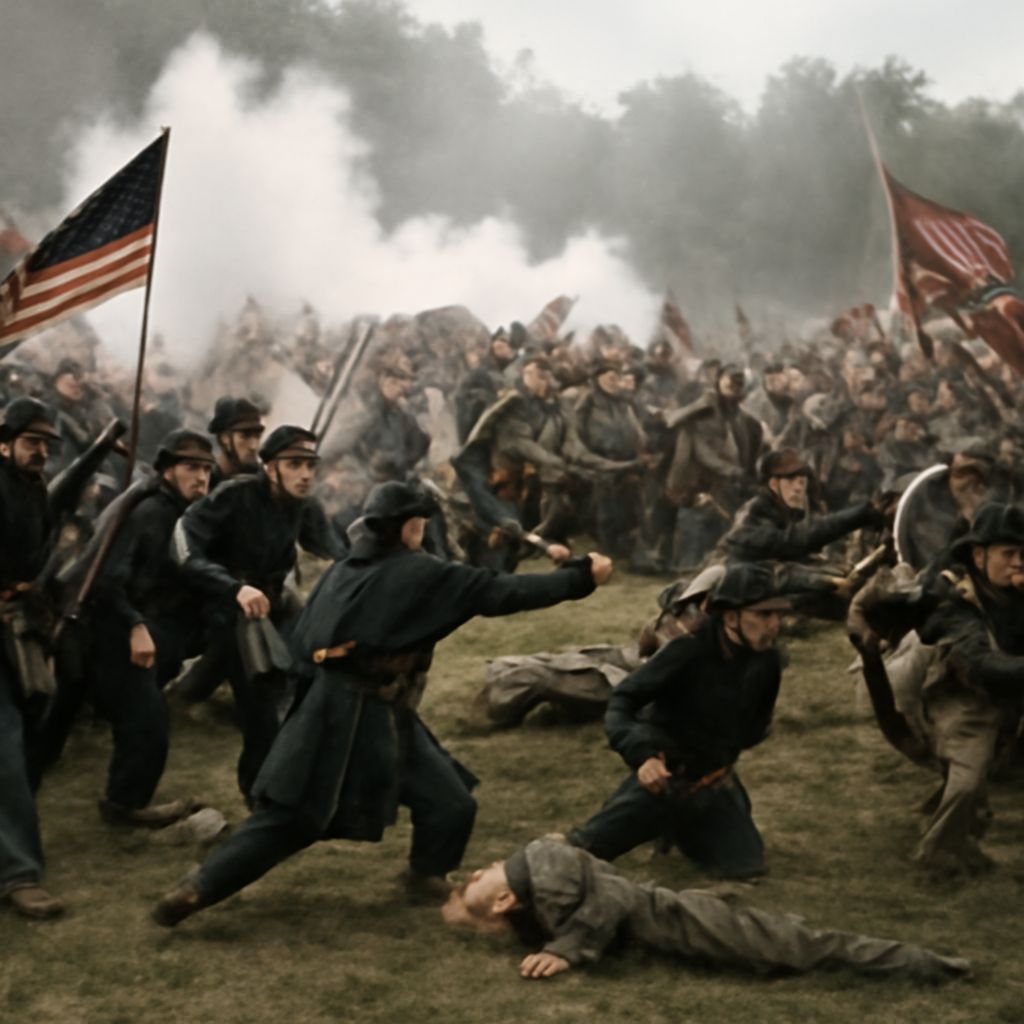
The Battle of Gettysburg stands as a pivotal moment in American history. Fought from July 1 to July 3, 1863, this epic clash marked a turning point in the Civil War. Known for its high casualties and strategic importance, the battle was a decisive victory for the Union forces and is often considered the war’s turning point.
Introduction to the Battle of Gettysburg
The Battle of Gettysburg took place in and around the town of Gettysburg, Pennsylvania. It involved the largest number of casualties of the entire war and is often described as the war’s turning point. The clash occurred when Confederate General Robert E. Lee attempted to invade the North, aiming to secure a victory on Union soil.
Key Facts About the Battle
Several key battle of Gettysburg facts stand out when examining this significant event. The battle involved approximately 85,000 Union soldiers and 75,000 Confederate soldiers. Over the course of three days, more than 51,000 soldiers were killed, wounded, captured, or went missing.
The first day of battle saw Confederate forces gaining ground, but the Union held strong positions. By the second day, the fighting intensified, with significant engagements at Little Round Top, the Wheatfield, and Devil’s Den. The battle culminated on July 3 with Pickett’s Charge, a failed assault by Confederate troops on the center of the Union line.
Summary of the Battle
The battle began on July 1, 1863, when Confederate forces engaged Union cavalry west of Gettysburg. The initial skirmishes evolved into a larger battle as reinforcements arrived. On the second day, intense fighting took place on the Union’s left flank and center.
Day three witnessed a dramatic Confederate attack known as Pickett’s Charge, which aimed to penetrate the Union center but resulted in heavy Confederate losses. The Union’s successful defense forced Lee to retreat, marking a significant loss for the Confederacy.
Significance of the Battle
The battle of Gettysburg significance is immense in American history. It marked the last major Confederate attempt to invade the North. The victory bolstered Union morale and strengthened President Lincoln’s position. Shortly after the battle, Lincoln delivered the Gettysburg Address, a speech that redefined the purpose of the war.
Beyond its immediate military implications, the battle shifted the momentum of the war in favor of the Union. It also underscored the war’s devastating human cost, shaping public perception and future military strategy.