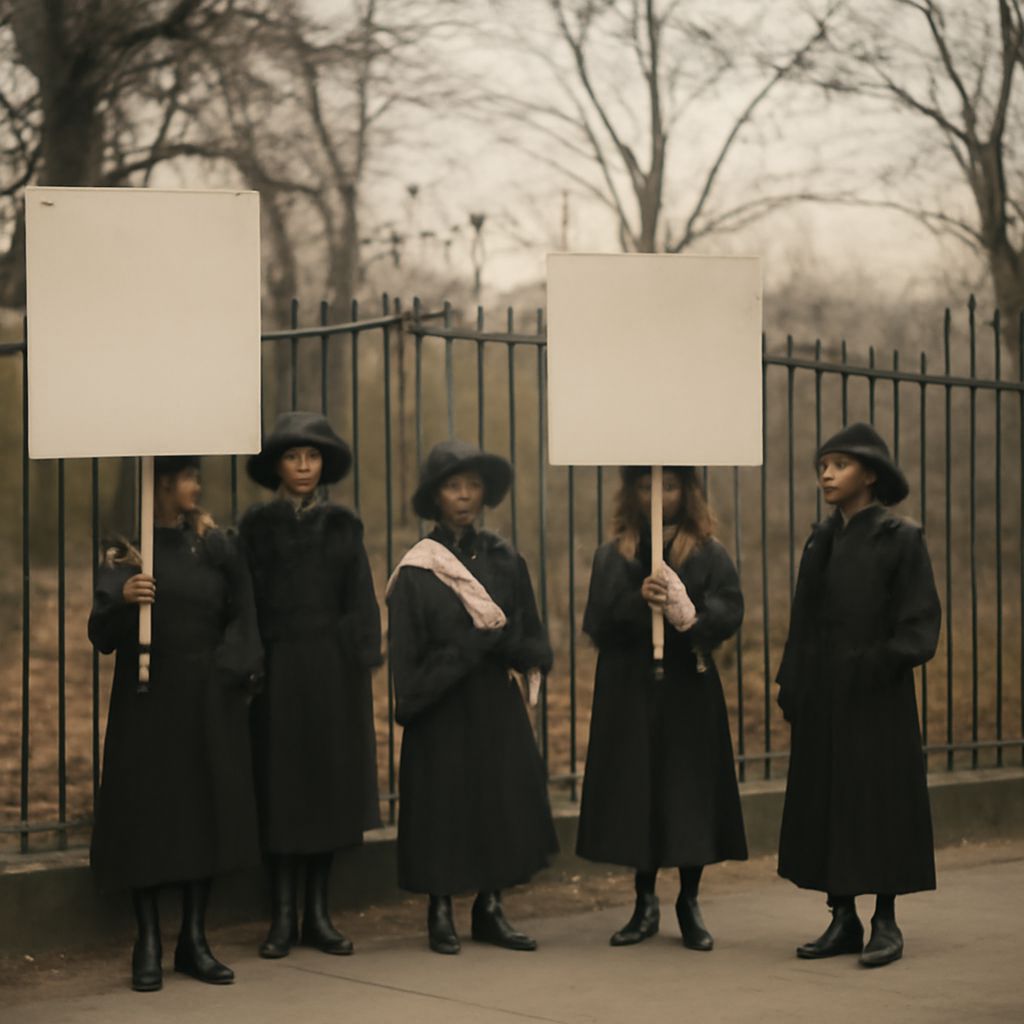
The claim that every American woman could vote after 1920 overlooks the distance between a constitutional rule and its enforcement. There are several answers: some voted before 1920, many more acquired protection against sex discrimination that year, and many faced racial barriers for decades afterward. The date when Black women were first allowed to cast ballots depended on where they lived and which elections were open to them.
Before 1920: Organizing for a Voice
Voting rules were largely set by states and territories. Some allowed women to vote in certain elections before a national amendment, while others excluded them. In Illinois, for example, women gained the ability to vote in presidential and some local elections in 1913. Black women organized to use that opening: Ida B. Wells founded Chicago’s Alpha Suffrage Club that year, linking the campaign for the ballot with the fight against racial injustice. The National Park Service’s account of Black suffragists places the club within a wider network of Black women’s organizations.
Their work was political even where the law barred them from casting ballots. They built associations, raised money, spoke publicly and pressed elected officials. Their place in the movement also reveals a contradiction: some white suffragists supported women’s enfranchisement while tolerating segregation or appealing to racial prejudice. A movement could challenge one exclusion while failing to confront another.
When Were Black Women Allowed to Vote Under the Constitution?
The constitutional answer begins before 1920. The Fourteenth Amendment established national citizenship for people born or naturalized in the United States, subject to its jurisdiction. The Fifteenth, ratified in 1870, prohibited denial of a citizen’s vote on account of race, color, or previous condition of servitude. It did not prohibit denying the vote because of sex. Together, those provisions left a major opening for states to exclude women from elections.
The Nineteenth Amendment closed that particular opening. Ratified on August 18, 1920, and certified on August 26, it barred federal and state governments from denying citizens the vote on account of sex. Its protection included Black women who were citizens. The National Archives’ ratification record documents both dates.
When did Black women get the right to vote nationwide? The amendment made sex an impermissible reason for exclusion nationwide in 1920, but citizenship and other voter qualifications still mattered, and officials continued to enforce racial barriers. Understanding that constitutional change calls for a distinction between the rule on paper and access to the ballot in a particular community.
Why 1920 Did Not End Disenfranchisement
When were Black women allowed to vote in practice? In many northern communities, they registered and voted after ratification. Some southern Black women also succeeded, but others encountered systems designed to prevent Black political participation. The National Park Service’s history of the years after ratification describes both successful registration and resistance through fraud, intimidation, and violence.
Poll taxes required payment as a condition of voting. Literacy tests could be administered selectively by local officials, and registration procedures gave those officials opportunities to delay or reject applicants. Threats of lost employment, eviction, and physical attack made the cost of trying to vote much higher. These measures worked together: a person could meet a formal requirement and still face a registrar who refused to apply it fairly.
The promise that law gave Black women the right to vote thus depended on institutions willing to honor it. The amendment was a consequential legal change, but it did not provide an immediate remedy for every discriminatory practice at the registration desk. The question of when Black women were permitted to vote in practice requires attention to those local decisions as well as to the Constitution.
The Civil Rights Movement and Federal Enforcement
Black women remained central to the campaign for effective access. Fannie Lou Hamer, a Mississippi organizer, challenged exclusion through voter registration drives and the Mississippi Freedom Democratic Party. Activists faced reprisals for their work, while demonstrations and violent attacks on marchers brought national attention to the obstacles they confronted.
The Twenty-fourth Amendment, ratified in 1964, prohibited poll taxes in federal elections. The Voting Rights Act of 1965 supplied stronger enforcement tools. As the National Archives explains, it suspended literacy tests in covered jurisdictions, provided for federal examiners where authorized, and required certain jurisdictions to obtain federal approval before changing voting rules. These mechanisms addressed the practical problem that case-by-case challenges had often been too slow to dismantle entrenched exclusion.
The law did not create a single instant at which every eligible person could vote without difficulty. It did give the federal government new means to intervene, and sustained organizing helped turn those provisions into registration and political participation. Later changes in law and court decisions affected enforcement, making the durability of those protections a continuing institutional question.
Other Women of Color Faced Different Barriers
When did women of color get the right to vote? There is no single date. Citizenship was a decisive distinction. The Indian Citizenship Act of 1924 recognized U.S. citizenship for Native Americans born in the United States who were not already citizens; some had obtained it earlier. Even after 1924, state laws and practices continued to obstruct Native voting in some places.
Asian American women born as U.S. citizens and immigrant women barred from naturalization did not occupy the same legal position. Congress allowed Chinese immigrants to naturalize in 1943, while the 1952 Immigration and Nationality Act removed racial restrictions that had barred naturalization for immigrants from other Asian countries. The National Park Service timeline records these changes. Latina citizens also encountered discriminatory rules and practices, including language barriers, in some jurisdictions.
The history is therefore a sequence of legal advances and struggles over their application. A formal right defines a claim against exclusion; the ability to use it depends on citizenship, administration, enforcement, and the freedom to approach the ballot without coercion.