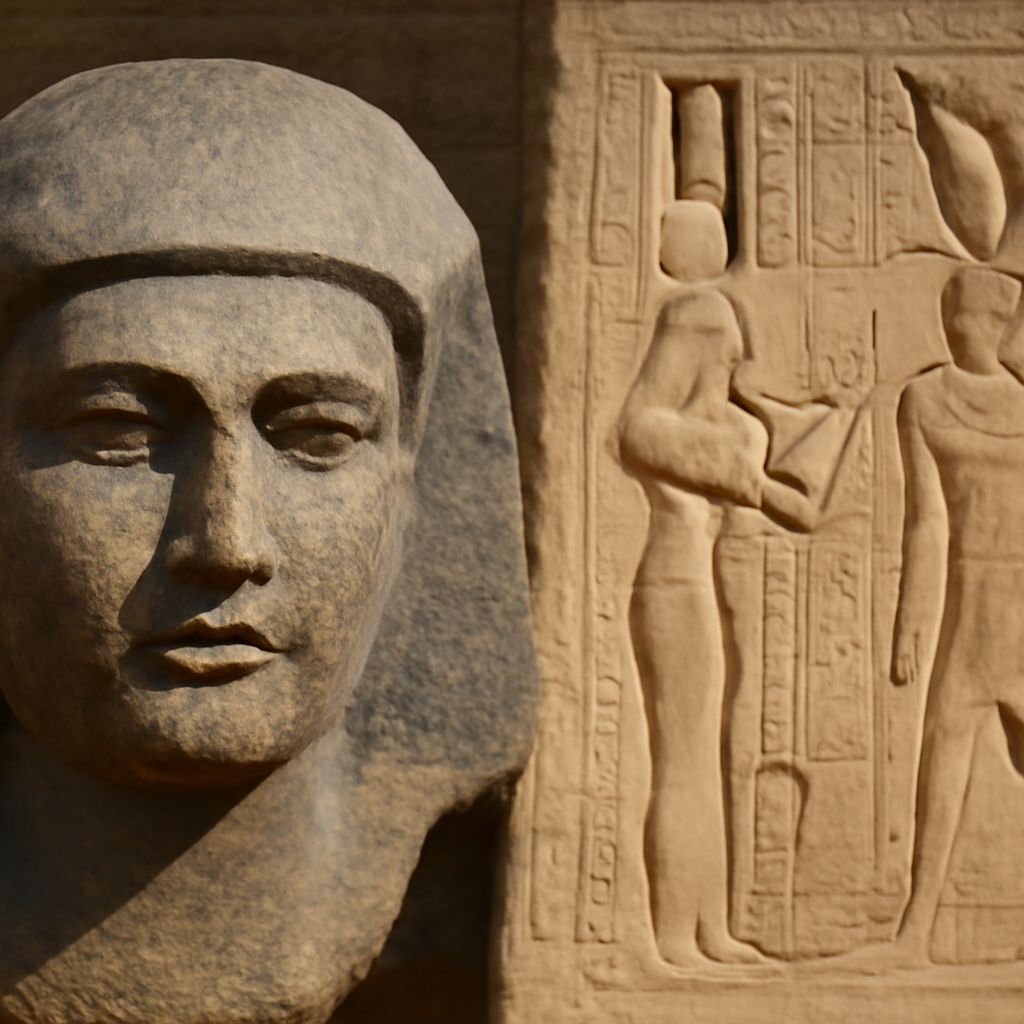
Cleopatra VII was the last pharaoh of Egypt. Her reign marked the final chapter of ancient Egypt’s independent rule before it became a province of the Roman Empire. Cleopatra’s life is a story of political ambition, legendary romance, and family drama. Her legacy continues to fascinate the world, not just because of her power and personality, but also due to her relationships with Rome’s most powerful men and the fate of her children. This article explores who was the last pharaoh of Egypt, examines Cleopatra’s children, discusses her alliance with Julius Caesar, and explains why her reign remains so significant today.
Cleopatra VII: The Last Pharaoh of Egypt
Cleopatra VII Philopator ruled as the last pharaoh of Egypt from 51 to 30 BCE. She was the final monarch of the Ptolemaic dynasty, a Macedonian Greek family that had governed Egypt since the time of Alexander the Great. Cleopatra came to power at a young age, first co-ruling with her father, Ptolemy XII, and then with her younger brother, Ptolemy XIII, whom she eventually defeated in a bitter civil war.
Unlike most of her predecessors, Cleopatra learned to speak Egyptian and embraced many local customs. This helped her connect with her Egyptian subjects, who had long been ruled by foreign kings. Her intelligence, fluency in several languages, and political savvy distinguished her from other rulers of her time. Cleopatra was a skilled diplomat and strategist, working tirelessly to maintain Egypt’s independence amid the rising power of Rome.
The question of “who was the last pharaoh of Egypt” is answered clearly by her reign. After Cleopatra’s death in 30 BCE, there were no more Egyptian-born or dynasty-linked rulers. Egypt was absorbed into the Roman Empire, marking the end of three millennia of pharaonic tradition.
Cleopatra’s Children and Their Fate
Cleopatra had four known children, each with a dramatic story shaped by her political alliances. Her oldest son, Ptolemy XV Philopator Philometor Caesar—known as Caesarion—was fathered by Julius Caesar. Caesarion’s full title reflected his mother’s hope that he would unite the Egyptian and Roman worlds. Cleopatra often promoted Caesarion as her co-ruler and the rightful successor of Julius Caesar.
Cleopatra also had three children with Mark Antony, the Roman general and her later ally: twins Alexander Helios and Cleopatra Selene II, and a younger son, Ptolemy Philadelphus. Each child was given a royal Ptolemaic name tied to the dynasty’s grand traditions. During Cleopatra’s alliance with Mark Antony, her children were granted symbolic titles and territories across the eastern Mediterranean, although Rome never recognized their claims.
After Cleopatra’s defeat by Octavian (later Augustus), the fate of her children was tragic. Caesarion was captured and killed on Octavian’s orders, ending the direct bloodline of the last pharaoh of Egypt. The three children by Mark Antony were taken to Rome and paraded in Octavian’s triumph. Cleopatra Selene II survived and married King Juba II of Mauretania, eventually ruling as queen. Her brothers disappear from the historical record soon after their arrival in Rome, presumed to have died young or lived in obscurity.
This family tragedy highlights the collapse of the Ptolemaic dynasty and the risks faced by the children of powerful rulers during times of political upheaval.
Cleopatra and Julius Caesar: A Political Alliance
Cleopatra’s relationship with Julius Caesar was both personal and political. She first met Caesar in 48 BCE during the Alexandrian War, when she famously had herself smuggled into his quarters wrapped in a rug. This meeting led to a close alliance, and together they defeated her brother’s forces, solidifying her rule in Egypt.
Cleopatra and Julius Caesar’s connection produced a son, Caesarion, whom she presented as Caesar’s only male heir. Their bond gave Cleopatra new security and access to Roman resources, while Caesar gained influence over Egypt and its vast wealth. Cleopatra visited Rome with Caesarion and was hosted in Caesar’s villa, causing controversy among the Roman elite.
Their alliance ended with Caesar’s assassination in 44 BCE. Cleopatra returned to Egypt, where she maneuvered to secure her son’s place as her co-ruler. The partnership between Cleopatra and Julius Caesar remains one of history’s most famous examples of political and romantic strategy intertwining at the highest level.
For the Ptolemaic dynasty, this relationship was an attempt to strengthen Egypt against external threats through direct ties to Rome’s most powerful leader, even as it risked scandal and resentment in both societies.
The End of the Pharaohs and Cleopatra’s Enduring Legacy
Cleopatra’s death in 30 BCE marked the end of ancient Egypt’s monarchy. After her suicide—traditionally believed to be by snakebite, though the true cause remains debated—Octavian annexed Egypt as a Roman province. The era of the pharaohs, stretching back over three thousand years, came to an abrupt close.
The legacy of the last pharaoh of Egypt endures through art, literature, and ongoing fascination with her story. Cleopatra was remembered both as a cunning seductress and a determined leader. Over time, her image has been shaped by Roman propaganda, Hollywood films, and scholarly debate. What remains clear is that Cleopatra VII was a ruler of remarkable ability who tried to defend her kingdom against overwhelming odds.
Her children, her alliances with Julius Caesar and Mark Antony, and her dramatic end all contribute to her status as a symbol of female power and tragic ambition. The question of who was the last pharaoh of Egypt is forever linked to the story of Cleopatra, her dynasty’s fall, and the dawn of a new era in world history.